
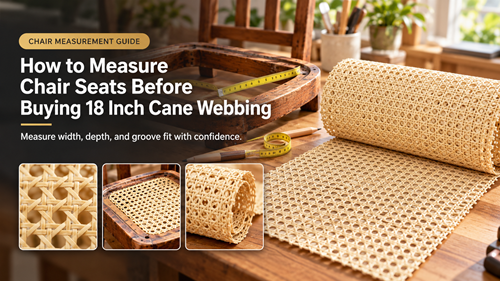
Buying 18 Inch Cane Webbing starts with the chair frame, not the number printed on a roll. An 18-inch product can work well for many pressed-cane chair seats, but only when the usable opening, groove position, weave direction, and installation margin all fit inside that width. Measure before removing more material than necessary. Record the […]
Blog
30
Oct
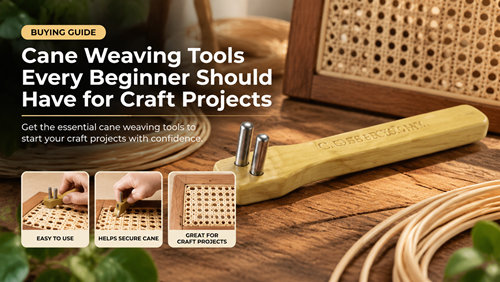
Cane weaving tools should make the material easier to control without damaging the cane or furniture frame. Beginners do not need every specialty tool, but sharp cutters, accurate measuring equipment, an awl, pegs or wedges for the chosen method, and a safe soaking setup make a major difference. The correct kit depends on whether the […]
27
Oct
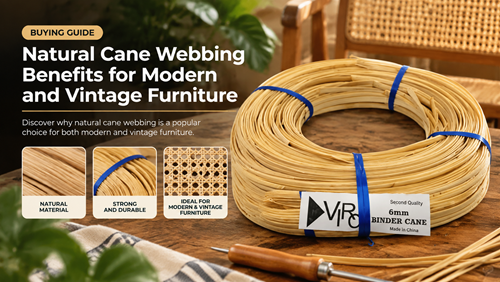
Natural cane webbing combines a light woven appearance with a material that has been used in furniture for generations. It works in both restoration and modern design because the pattern adds texture without visually filling the opening like solid wood or upholstery. The benefits depend on using the material where it belongs. Natural rattan can […]
24
Oct
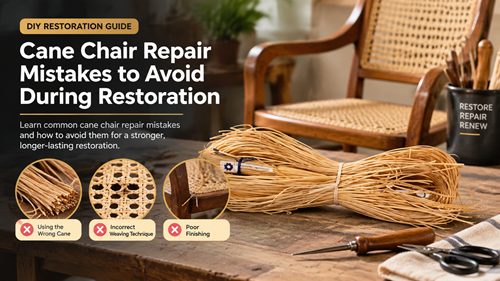
Most cane chair repair mistakes happen before the new seat is finished. Misidentifying the caning method, damaging a spline groove, ordering the wrong material, over-tightening wet cane, or trimming too early can turn a manageable restoration into a second repair. A careful process is slower at the beginning and faster overall. Photograph the chair, inspect […]
22
Oct
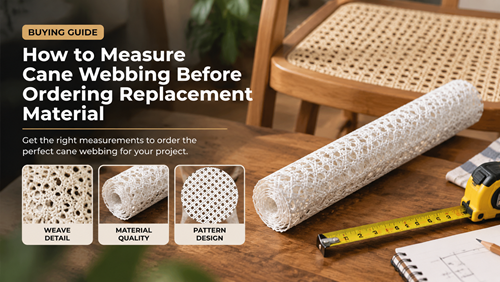
Knowing how to measure cane webbing before ordering prevents the most common material problem: a sheet that covers the visible opening but does not provide enough extra cane to reach and work inside the groove. Measurements should include the installation method, not only the finished opening. For a pressed-cane chair, record the maximum opening size, […]
19
Oct
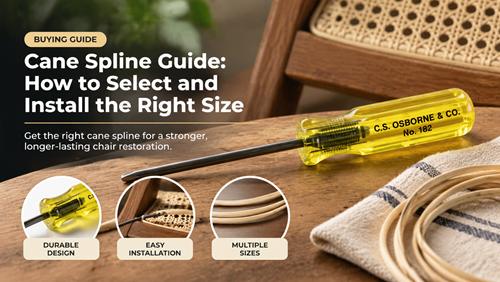
A cane spline guide is most useful after the old spline and glue have been removed. Reed spline is the locking strip that secures pressed cane webbing in a routed groove, and its fit depends on the actual cleaned channel rather than the compressed size of the old spline. Spline that is too small can […]
16
Oct
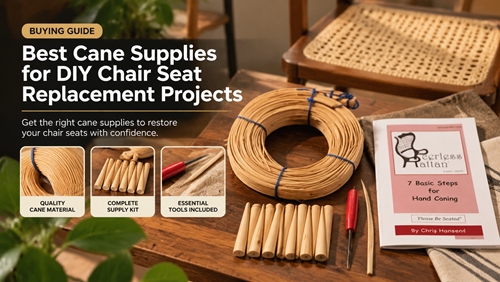
The best cane supplies for chair repair are determined by the chair, not by the size of a tool bundle. A groove-style pressed-cane seat needs webbing, spline, wedges, trimming tools, and compatible glue, while a drilled-hole hand-caned seat needs strand cane, binder cane, pegs, and an awl. Before buying a kit, inspect the frame and […]
13
Oct
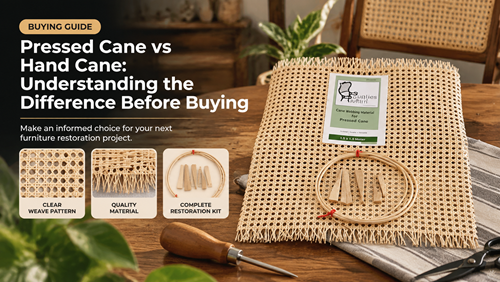
Pressed cane vs hand cane is not simply a choice between a fast method and a traditional method. In most repairs, the chair frame has already made the decision: pressed cane uses a pre-woven sheet fitted into a routed groove, while hand cane is woven strand by strand through drilled holes around the frame. Buying […]
10
Oct
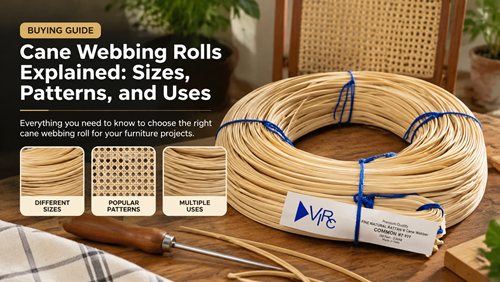
Cane webbing rolls are sold in many widths, lengths, and patterns, but the roll dimensions are only the starting point. A useful comparison also considers mesh scale, pattern direction, natural material variation, the size of the finished opening, and whether the cane will be structural or decorative. For chair repair, the frame construction controls the […]
07
Oct
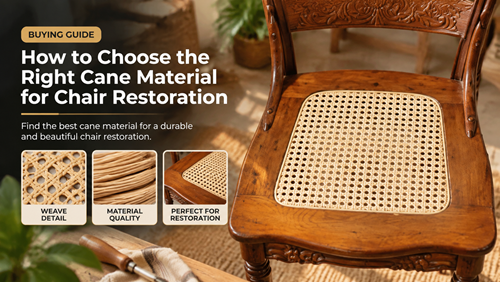
Choosing cane material for chair restoration is easier when the frame is treated as the specification. A chair with a routed groove needs a different material system from a chair with drilled holes, even when both finished seats have a familiar hexagonal appearance. The restoration goal also matters. An antique chair may benefit from matching […]