
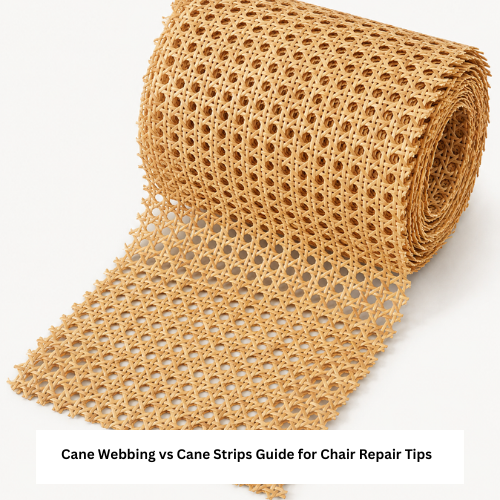
Choosing between cane webbing and cane strips depends on the chair frame, repair method, skill level, and finished look you want. Cane webbing is usually a pre-woven sheet for groove-style furniture, while cane strips are used for traditional hand weaving through drilled holes.
Both materials can be useful for cane chair repair, but they are not interchangeable in every project. Before buying, check the frame design, groove or hole layout, cane size, roll width, soaking needs, and tool requirements.
Why Cane Webbing and Cane Strips Are Different
Cane webbing is already woven into a sheet, so it is often faster for chair seats, cabinet inserts, and furniture panels. Cane strips are individual strands that must be woven by hand.
A chair with a groove around the seat usually needs cane webbing and spline. A chair with holes around the frame usually needs cane strips or chair cane strands.
How to Choose Cane Webbing for Furniture Repair
Cane webbing should be chosen by width, weave pattern, material type, and the groove size of the chair or panel. Do not order by appearance only because sheet width and mesh pattern matter.
Use cane webbing when your project needs pre-woven material for groove-style chair seats, cabinet doors, or furniture panels.
Before buying, check:
- Sheet or roll width
- Weave pattern
- Natural or synthetic material
- Groove size
- Spline size
- Soaking instructions
- Installation tools
- Cutting allowance
- Return policy
- Replacement material availability
| Material | Best For | Buyer Benefit | Limitation | Verify Before Buying |
| Cane webbing | Groove-style chairs and panels | Faster installation | Must match groove and spline | Roll width and pattern |
| Cane strips | Hand-caned chairs | Traditional woven look | More time and skill needed | Strand width and hole spacing |
| Rattan webbing | Decorative panels and repairs | Natural woven appearance | Pattern and size vary | Material type and dimensions |
| Pre-woven cane | Seat inserts and cabinet fronts | Easier for DIY projects | Not for all chair frames | Frame channel compatibility |
| Hand caning cane | Traditional chair restoration | Strong custom weaving | Advanced beginner skill | Cane size and weave pattern |
When Cane Strips Are Better
Cane strips are better for traditional chairs with drilled holes around the seat frame. They allow hand weaving and can create a classic caned pattern.
A cane strips project takes more time because each strand must be guided through the chair frame in the right sequence.
If the chair has holes instead of a groove, do not force cane webbing into the frame. Use the correct chair cane material for that structure.
When Rattan Webbing or Pre-Woven Cane Works Better
Rattan webbing or pre-woven cane may be better when the chair or furniture piece has a routed channel that can hold a sheet and spline.
A rattan webbing roll can also work for cabinet doors, drawer fronts, room dividers, or decorative panels when the size and weave pattern match.
For product comparison, review rattan webbing roll options and verify roll width, weave style, natural material details, project fit, and return policy before buying.
A pre-woven cane sheet can save time for DIY users, but buyers should verify groove depth, spline size, and cutting allowance before ordering.
Cane Chair Repair Compatibility Notes
Cane chair repair starts with the frame, not the material. Look closely at the seat edge. A groove suggests webbing. A row of holes suggests hand caning.
A cane chair repair project may fail if the wrong material is selected, even if the cane itself looks good.
If the frame is cracked, loose, or warped, fix the frame first. Cane material cannot make a weak chair structure safe.
Measuring and Setup Tips
Measure the full seat opening and add enough material for trimming if the product instructions require it. For cane webbing, check roll width and make sure the sheet covers the seat with extra margin.
For cane strips, check the hole spacing and strand width. If the cane is too thick, it may not pass through the holes easily. If it is too thin, the finished weave may look loose.
Safety and Handling Advice
Natural cane can splinter, and old chair frames may have sharp edges. Handle material carefully and use proper tools when removing old webbing or strips.
Soak natural cane only according to instructions. Oversoaking or undersoaking can affect flexibility and handling.
Keep cutting tools, wet cane, glue, and small spline pieces away from children and pets.
Cleaning and Maintenance Tips
After installation, keep cane furniture away from direct heat, heavy moisture, and rough use. Natural cane may dry out when exposed to harsh indoor heat.
Maintenance tips:
- Dust with a soft cloth
- Avoid soaking the finished seat
- Do not stand on cane seats
- Check loose edges early
- Keep unused cane dry after preparation
- Store rolls flat or loosely rolled
- Avoid heavy pressure on fresh repairs
Common Buying Mistakes
Buyers often confuse cane webbing with hand caning cane.
Avoid these mistakes:
- Buying webbing for a drilled-hole chair
- Buying strips for a groove-style chair
- Not checking groove size
- Ignoring roll width
- Forgetting spline size
- Not checking weave pattern
- Skipping return policy
Troubleshooting Material Problems
If cane webbing will not sit in the groove, check sheet thickness, groove cleanliness, and spline size. If it wrinkles, the sheet may not be positioned evenly.
If cane strips keep breaking, check soaking instructions and strand size. If the hand weave looks uneven, review the pattern before tightening the next row.
Practical Buying Checklist
Before buying, confirm:
- Size or fit: Webbing width, cane strip size, and spline match the chair
- Compatibility: Material matches groove-style or drilled-hole construction
- Safety: Old frame edges, tools, and cutting steps are manageable
- Material or build quality: Cane, rattan, webbing, and strips look suitable
- Setup or installation: Soaking, trimming, and fitting steps are clear
- Maintenance: Cleaning and storage instructions are simple
- Warranty: Verify before buying
- Return policy: Check before ordering
- Replacement parts: Verify cane rolls, cane strips, spline, wedges, and tools
- Delivery or support: Confirm shipping before starting the repair
- Verify before buying: Do not assume webbing and strips fit the same chair
Conclusion
Cane webbing is usually better for groove-style chair seats and furniture panels, while cane strips are better for traditional hand-caned chairs with drilled holes. Compare frame type, material size, weave pattern, tools, and return policy before choosing cane webbing or cane strips.
FAQ
Is cane webbing easier than cane strips?
Yes. Cane webbing is usually easier because it is pre-woven and used as a sheet.
When should I use cane strips?
Use cane strips for traditional chairs with drilled holes around the frame.
Can I replace cane strips with cane webbing?
Only if the chair frame is designed for webbing and spline. Verify before buying.
Does cane webbing need soaking?
Natural cane webbing often needs soaking, but always follow product instructions.
What should I verify before buying?
Verify frame type, material size, roll width, spline size, weave pattern, and return policy.
