
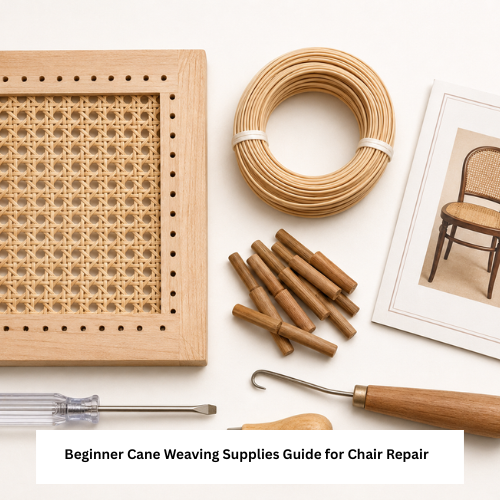
Choosing cane weaving supplies is the first step for beginners who want to repair cane chairs, restore woven seats, or start small furniture repair projects at home. The right materials help you match the chair frame, weaving style, cane size, and repair method before you begin.
For DIY crafters, chair caning beginners, and furniture repair users, cane weaving supplies should be chosen carefully because not every chair uses the same cane material. Some chairs need pre-woven cane webbing, while others need hand caning cane, spline, wedges, or a beginner repair kit.
Why Cane Weaving Supplies Matter for Chair Repair
Cane weaving supplies affect how strong, neat, and long-lasting the finished chair seat will be. If the material is too wide, too narrow, too dry, or not made for your chair style, the repair can look uneven or fail early.
Beginners should first identify the chair construction. A groove-style chair usually uses cane webbing and spline, while a chair with drilled holes usually needs individual cane strands for hand caning.
How to Choose Cane Weaving Supplies
Cane weaving supplies should match the chair type, seat opening, groove size, hole spacing, and repair skill level. Do not buy only by product photo because cane width, weave pattern, and roll size can vary.
Use chair caning supplies when comparing repair tools, cane material, wedges, spline, and beginner chair restoration options.
Before buying, check:
- Chair frame style
- Groove or drilled-hole construction
- Seat opening size
- Cane width or strand size
- Spline size if needed
- Weave pattern
- Soaking instructions
- Tool requirements
- Return policy
- Replacement material availability
| Material or Tool | Best For | Buyer Benefit | Limitation | Verify Before Buying |
| Cane webbing | Groove-style chair seats | Faster repair for pre-woven seats | Must fit groove and pattern | Webbing width and spline size |
| Chair cane strands | Hand-caned chairs | Traditional woven repair | Requires more skill and time | Strand size and hole spacing |
| Reed spline | Securing cane webbing | Holds webbing in groove | Wrong size can loosen repair | Groove size and spline diameter |
| Caning wedges | Installing webbing | Helps press material into groove | Not always included | Tool quantity and size |
| Beginner kit | First chair repair project | Easier starter setup | May not fit every chair | Included pieces and compatibility |
Cane Webbing, Rattan Cane, and Chair Material
Cane webbing is useful when your chair has a routed groove around the seat opening. It is installed as a sheet and secured with spline.
A cane webbing roll may be useful for chair seats, cabinet panels, or furniture inserts, but buyers should verify width, pattern, and natural or synthetic material before buying.
Traditional hand caning usually uses rattan cane strands that pass through holes around the frame. This method takes longer but can be the correct repair style for older chairs.
Beginner Setup Tips Before Repair
Before starting, remove old cane carefully and clean the groove or holes. Measure the chair opening and check whether the frame is stable enough for repair.
A beginner-friendly cane kit can be useful for first-time repair users, but beginners should still verify whether the included cane, spline, wedges, and tools match the chair.
For product comparison, review chair caning repair kit options and verify cane size, spline, tools, instructions, and return policy before buying.
Chair Repair Safety Notes
Cane repair can involve sharp tools, soaking water, old glue, splinters, and tight frame edges. Work slowly and keep cutting tools away from children and pets.
Wear hand protection if the old cane or frame edges feel sharp. If the chair frame is cracked, loose, or weak, repair the structure before adding new cane material.
Common Buying Mistakes
Beginners often order cane material before checking the chair style.
Avoid these mistakes:
- Buying cane webbing for a drilled-hole chair
- Buying cane strands for a groove-style chair
- Not measuring groove width
- Ignoring spline size
- Forgetting soaking instructions
- Using dry cane without checking directions
- Skipping return policy
Troubleshooting Cane Chair Repair
If the cane breaks during installation, it may be too dry, too stiff, or pulled too tightly. Check soaking instructions and handle the material gently.
If cane webbing loosens after installation, the spline size may be wrong or the groove may not be clean. If hand caning looks uneven, check tension and weave pattern before continuing.
Cleaning and Maintenance After Repair
After repair, keep the chair away from direct heat and excess moisture. Natural cane can dry out or weaken if exposed to harsh conditions.
Maintenance tips:
- Dust gently with a soft cloth
- Avoid standing on cane seats
- Keep furniture away from strong heat
- Check weave tension over time
- Clean spills quickly
- Avoid harsh chemical cleaners
- Store unused cane material dry after it is fully aired
Practical Buying Checklist
Before buying, confirm:
- Size or fit: Cane size, webbing width, and spline match the chair
- Compatibility: Material matches groove-style or hand-caned construction
- Safety: Tools, old frame edges, and cutting steps are safe to handle
- Material or build quality: Cane, rattan, spline, and wedges look suitable
- Setup or installation: Instructions and soaking steps are clear
- Maintenance: Cleaning and storage instructions are easy to follow
- Warranty: Verify before buying
- Return policy: Check before ordering
- Replacement parts: Verify cane rolls, spline, wedges, and tools
- Delivery or support: Confirm shipping before starting the repair
- Verify before buying: Do not assume chair type, cane width, or included tools
Conclusion
Cane weaving supplies should be selected by chair type, repair method, material size, tool needs, and beginner skill level. Measure first, identify whether the chair needs webbing or hand cane, and compare cane weaving supplies carefully before starting chair repair.
FAQ
What cane weaving supplies do beginners need?
Beginners may need cane material, spline, wedges, soaking container, cutting tools, and basic chair caning tools.
How do I know if my chair needs cane webbing?
If the chair has a routed groove around the seat, it usually uses cane webbing and spline.
Do I need to soak cane before repair?
Natural cane often needs soaking, but always follow the product instructions.
Can beginners repair a cane chair at home?
Yes, if the chair style is simple and the materials match. Complex hand caning may take more practice.
What should I verify before buying?
Verify chair type, cane size, spline size, tool needs, instructions, return policy, and replacement material availability.
