
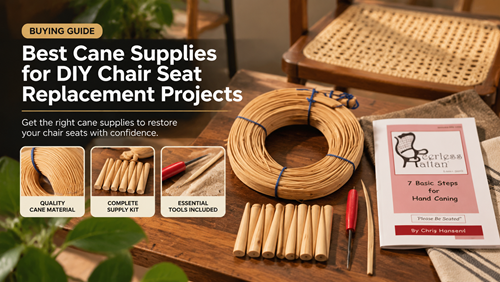
The best cane supplies for chair repair are determined by the chair, not by the size of a tool bundle. A groove-style pressed-cane seat needs webbing, spline, wedges, trimming tools, and compatible glue, while a drilled-hole hand-caned seat needs strand cane, binder cane, pegs, and an awl. Before buying a kit, inspect the frame and […]
Author Archives: admin
13
Oct
Oct
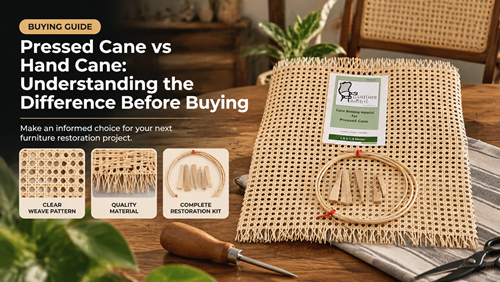
Pressed cane vs hand cane is not simply a choice between a fast method and a traditional method. In most repairs, the chair frame has already made the decision: pressed cane uses a pre-woven sheet fitted into a routed groove, while hand cane is woven strand by strand through drilled holes around the frame. Buying […]
10
Oct
Oct
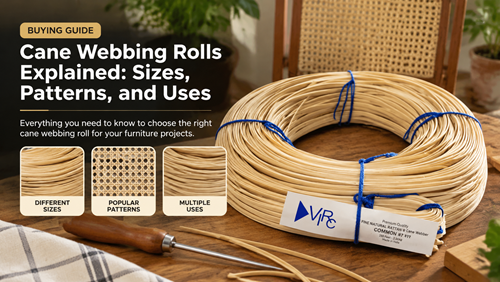
Cane webbing rolls are sold in many widths, lengths, and patterns, but the roll dimensions are only the starting point. A useful comparison also considers mesh scale, pattern direction, natural material variation, the size of the finished opening, and whether the cane will be structural or decorative. For chair repair, the frame construction controls the […]
07
Oct
Oct
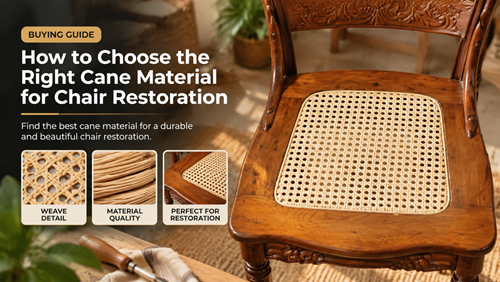
Choosing cane material for chair restoration is easier when the frame is treated as the specification. A chair with a routed groove needs a different material system from a chair with drilled holes, even when both finished seats have a familiar hexagonal appearance. The restoration goal also matters. An antique chair may benefit from matching […]
05
Oct
Oct
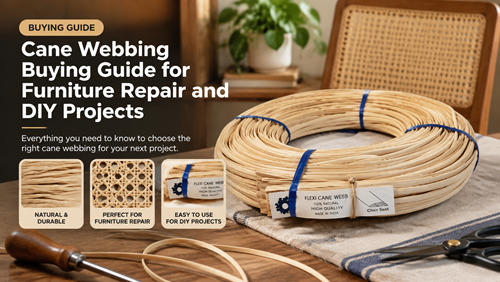
A cane webbing buying guide should begin with the furniture, not the roll. Before ordering, identify whether the project uses a routed groove for pressed cane, a drilled-hole frame for hand caning, or cane as a decorative panel. That one inspection determines whether pre-woven webbing is appropriate and prevents many expensive material mistakes. Width, weave […]
30
Sep
Sep
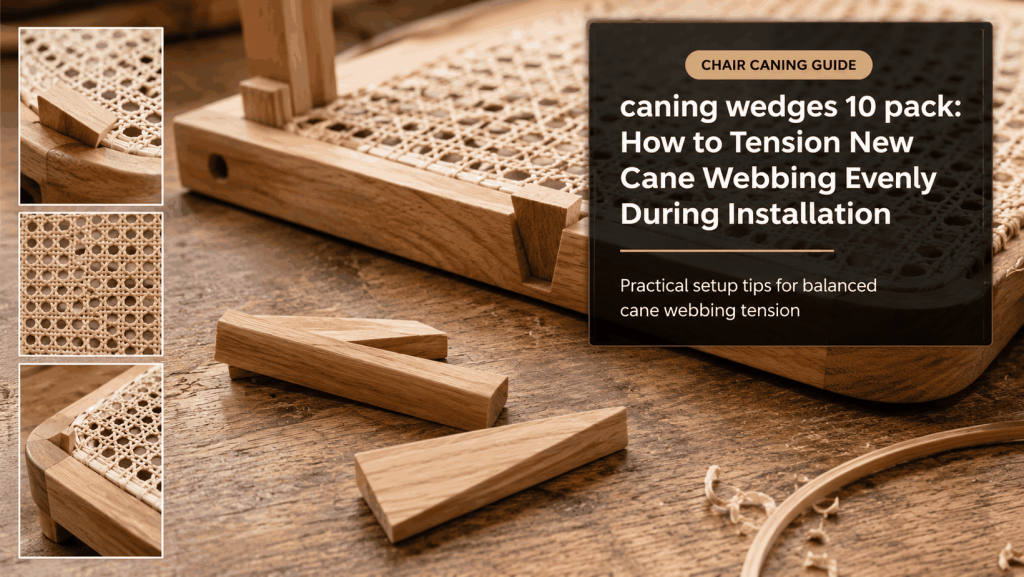
caning wedges 10 pack gives a pressed-cane installer multiple temporary holding points around the chair groove. The wedges are not used to create final drum-tight tension. Their job is to keep the wet webbing centered, seated, and stable while the installer works around the perimeter and prepares for spline. Even tension comes from sequence. If […]
Basket Making Supplies
Christmas Ornament Basket Weaving Kit Ideas for Handmade Holiday Gifts and Tree Decor

28
Sep
Sep
Christmas Ornament Basket Weaving Kit projects compress normal basket-making skills into a very small format. Because there is less distance between stakes and fewer rows to correct an error, tiny changes in tension, reed moisture, shaping, and finishing become visible immediately. That sensitivity is also what makes miniature baskets useful as handmade gifts and tree […]
Chair Caning
Chair Cane Fine 2.5mm 270 ft Coil for Delicate Antique Seats: Sizing and Project Planning
21
Sep
Sep
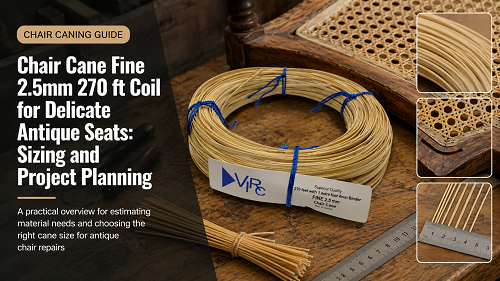
Chair Cane Fine 2.5mm 270 ft Coil is intended for traditional hand-caned seats that use individual strands through drilled holes, not for pressed-cane frames with a continuous groove. The critical buying question is whether 2.5mm matches the chair’s original hole diameter, spacing, pattern scale, and binder requirement. Delicate antique seats reward accurate sizing because strand […]
Basket Making Supplies
Cape Cod Blueberry Basket Kit Project Guide for Building a Functional Handwoven Berry Basket

14
Sep
Sep
The Cape Cod Blueberry Basket Kit is a practical project for learning how a small working basket grows from a flat base into straight walls, a stable rim, and a handle that can actually be carried. Because the basket is compact, spacing errors show quickly, which makes it a useful project for improving control rather […]
07
Sep
Sep
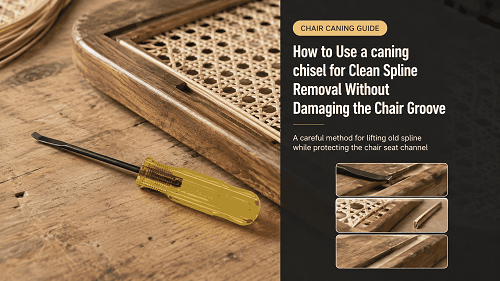
A caning chisel is most useful when it removes old spline in small controlled sections instead of being treated like a pry bar. The chair groove is part of the frame, so every cut should free the old material while preserving the groove width, depth, and outer lip for the new pressed-cane installation. Clean removal […]