
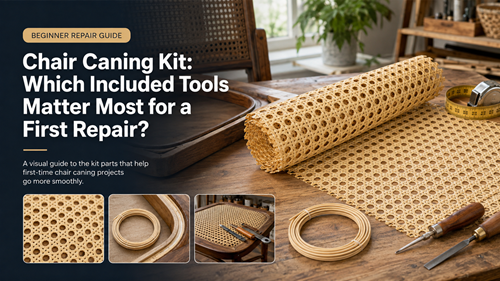
Chair Caning Kit is useful for a first traditional woven-seat repair when the kit matches the chair’s strand size and includes the tools that control layout, hole management, and finishing. Extra accessories are less important than correct cane, pegs, a smooth awl, binder material, clear instructions, and basic measuring tools.
Before buying an all-in-one set, confirm that the chair has individual perimeter holes rather than a continuous groove. A hand-caning kit will not replace prewoven webbing and spline on a pressed-cane frame.
What A Chair Caning Kit Should Include For A First Repair
Traditional hand caning builds a seat strand by strand through drilled holes. The first repair therefore needs tools for measuring, organizing strands, temporarily holding passes, clearing holes, and finishing the perimeter.
A kit that contains the wrong cane size is not rescued by having more accessories. Measure hole diameter and spacing and compare any surviving original cane before evaluating the rest of the contents.
For beginners, clear instructions are especially valuable because the sequence matters. Vertical, horizontal, diagonal, and finishing passes build on one another, and an early alignment error becomes harder to correct later.
The Kit Components That Actually Change The Repair
Start With Correct Cane And Binder
Review beginner chair caning kit contents by checking the cane size and binder material before counting tools.
The working cane should pass the chair holes comfortably, while binder should be wide enough to finish the perimeter without looking disproportionate.
Prioritize A Small Set Of Reliable Tools
The essential caning repair tools are measuring tools, pegs, an awl or smooth hole tool, sharp cutters, and a stable soaking and work setup.
Avoid tools with rough metal edges that can shave prepared cane. Smooth contact surfaces reduce strand damage during repeated passes.
Choose A First Project With A Sound Frame
A first woven seat project is easier when the chair is structurally stable and has an uncomplicated hole pattern.
Loose joints, broken rails, or badly damaged holes turn a weaving lesson into a furniture-repair problem. Fix the frame before starting the cane pattern.
Make Sure The Kit Covers The Full Process
Complete chair cane starter supplies should support setup, weaving, holding, finishing, and cleanup rather than only providing a coil of cane.
A beginner benefits from having everything staged before soaking strands. Repeatedly leaving the chair to search for a tool interrupts tension and concentration.
Use Pegs And An Awl Deliberately
A practical hand caning tool checklist includes enough pegs to hold active holes and an awl that can guide strands without enlarging them.
Pegs are temporary organizers, not wedges to be hammered tightly. The awl should separate or guide strands gently rather than act as a pry bar.
Use Instructions That Match The Chair
A beginner seat restoration goes more smoothly when the instructions explain the same hole pattern and finishing method used by the frame.
Read the entire sequence before weaving the first strand. Knowing where later diagonals and binder passes will go helps prevent early crowding.
Kit Components By Priority
Not every item deserves equal weight when comparing starter kits.
| Component | Priority | Why It Matters |
|---|---|---|
| Correct cane size | Essential | Determines fit through the chair holes |
| Binder cane | Essential | Finishes and covers the perimeter |
| Pegs | High | Temporarily hold active strands |
| Awl/hole tool | High | Guides strands and manages crowded holes |
| Instructions | High for beginners | Keeps pattern sequence organized |
| Extra decorative accessories | Low | Do not improve a basic seat repair |
Set Up The First Repair Before Soaking Cane
Lay out the kit and add the household tools it does not provide. Label cane size and binder, protect the floor from water, and position the chair so the underside is easy to reach.
First-Repair Setup Checklist
- Confirm hand-caned perimeter holes
- Measure hole size and spacing
- Verify kit cane size
- Inspect pegs and awl for rough edges
- Stage cutters and measuring tools
- Prepare a shallow soaking container
- Protect the work surface
- Read the full pattern instructions
- Photograph the original seat before removal
Work in short sections and keep unused cane covered or dry until it is needed. Beginners often damage more material through tangling and repeated handling than through the actual weaving steps.
Starter Kit Features That Can Distract From Fit
A long accessory list can make a kit look comprehensive even when the cane size is wrong for the chair. Fit comes first. Another mistake is assuming instructions for pressed cane, rush, or hand caning are interchangeable; the frame construction determines the method.
Do not enlarge holes with the awl just because a strand is difficult to pass. Recheck cane size and the amount of material already sharing the hole.
For material background, the Canadian Conservation Institute explains cane, wicker, coiling, plaiting, and other plant-fibre construction in its basketry and plant materials guidance.
Choose A Kit Around The Chair, Not The Accessory Count
Chair Caning Kit should reduce sourcing decisions while still matching the frame. Correct cane, binder, pegs, a smooth awl, and clear instructions matter more than a large collection of extras.
Confirm the chair method and size first, then use the kit as an organized starting point. A stable setup and deliberate sequence make the first woven seat far more manageable.
Frequently Asked Questions
What is the most important item in a chair caning kit?
Correct-size cane is the first priority because every tool depends on material that fits the chair holes.
How many pegs does a beginner need?
Enough to hold the active strands and key holes in the pattern. The exact number varies, but a practical kit usually includes several.
Can a hand-caning kit repair pressed cane?
No. Pressed cane uses prewoven webbing, a groove, and spline rather than individual perimeter holes.
Do I need an awl?
A smooth awl or hole tool is very useful for guiding strands and managing crowded holes, but it should not be used to enlarge the frame.
Should I soak the whole coil at once?
Usually it is easier to prepare only the amount needed for the current stage, following the material instructions.
