
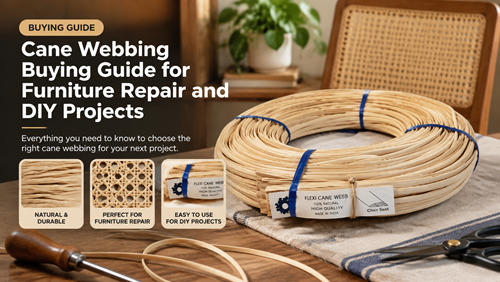
A cane webbing buying guide should begin with the furniture, not the roll. Before ordering, identify whether the project uses a routed groove for pressed cane, a drilled-hole frame for hand caning, or cane as a decorative panel. That one inspection determines whether pre-woven webbing is appropriate and prevents many expensive material mistakes.
Width, weave pattern, natural variation, spline size, installation method, and the amount of extra material all matter. A roll that looks correct in a product photo can still be wrong for the chair if the groove, opening, or existing pattern is different.
Start the Cane Webbing Buying Guide with the Furniture Frame
Identify the Repair Method First
Use the frame construction to decide whether you need cane chair repair materials for pressed cane or strand-by-strand hand caning. A continuous groove around the opening points to sheet cane; a series of drilled holes points to traditional hand caning.
Do not buy by visual pattern alone. Two seats can look similar from above while using completely different fastening systems underneath. Photograph the underside and edge of the seat before removing old material so you retain a reference for the original construction.
Match Material to the Intended Use
For furniture panels, seats, backs, cabinet inserts, and decorative screens, compare the actual furniture cane material with the demands of the project. Seating needs correct structure and installation, while a decorative cabinet panel can prioritize pattern and appearance.
Natural rattan has normal colour and texture variation. If adjacent panels must match closely, order enough material at one time and lay the pieces side by side before cutting.
Check Sheet Construction and Pattern
Pre-woven woven cane sheets are convenient for grooved frames because the pattern is already formed. Confirm mesh scale, strand width, orientation, and whether the product is natural rattan or a synthetic substitute before comparing prices.
Keep a usable section of the old cane when possible. It can help you compare opening size, weave density, colour, and pattern orientation after the old seat has been removed.
Choose Roll Size, Quantity, and Repair Supplies
Size the Roll with Working Margin
When comparing cane webbing rolls, the roll must be wider than the chair or panel opening. For pressed-cane work, leave enough material beyond the groove to position, tamp, and trim the webbing without running short at a corner.
Measure the widest and longest points of irregular openings, not only the centre. If several chairs are being restored, sketch a cutting plan before ordering so offcuts can be used efficiently.
Plan the Supporting Materials Together
A repair is easier when the webbing, spline, wedges, cutting tools, and glue are treated as one set of chair restoration supplies. Buying the webbing first and checking spline later can cause delays when the groove requires a different size.
Inspect the groove after the old spline is removed. Old glue and broken reed can make the opening look narrower than it really is, so clean the groove before taking the final spline measurement.
Buy for the Whole DIY Project
For a first DIY furniture repair, include a little extra material for alignment and trimming rather than ordering an exact opening size. The working margin is especially valuable when the seat is trapezoidal, curved, or slightly out of square.
Extra cane should be stored loosely rolled in a dry indoor area. Avoid sharp creases because a fold can remain visible or weaken strands before the material is installed.
Prefer Natural Rattan When the Project Calls for It
If the original furniture used rattan, compare the replacement as natural cane material rather than assuming every woven sheet has the same fibre or finish. Natural cane is especially appropriate when matching traditional indoor furniture and an authentic rattan surface matters.
Check colour, strand character, and pattern in good light before cutting. Natural material can vary slightly, so related panels are easier to match when they come from the same roll or purchase batch.
Cane Webbing Selection Checklist
Use this comparison as a planning aid. The furniture frame, product specifications, and installation method should always take priority over a generic rule.
| Decision | What to Measure or Confirm | Why It Matters |
|---|---|---|
| Frame type | Groove or drilled holes | Determines pressed webbing versus hand cane |
| Opening size | Maximum width and length | Sets minimum sheet or roll dimensions |
| Weave pattern | Mesh size and orientation | Keeps the repair visually consistent |
| Spline groove | Clean groove width | Helps select correct spline |
| Project count | Number and size of panels | Prevents under-ordering |
| Material | Natural or synthetic | Affects appearance, handling, and care |
Prepare Before Cutting Natural Cane Material
Before You Commit to the Final Cut or Installation
- Photograph the existing seat or panel
- Measure the opening at several points
- Clean the groove before measuring spline
- Keep a sample of the original weave
- Plan cuts across the roll before trimming
- Read the material soaking instructions
- Test orientation before pressing cane into the groove
- Allow installed cane to dry before normal use
For a detailed pressed-cane installation sequence, review the sheet cane installation instructions. The guide shows how groove-style webbing, wedges, spline, trimming, and drying fit together.
Keep measurements, product labels, and a small offcut after the project. Those records make future maintenance or a matching second repair much easier than trying to identify the material years later.
Plan the Project with Fewer Surprises
A useful cane webbing buying guide connects the product dimensions to the exact furniture frame. Measure first, identify the caning method, match the pattern, and buy enough working margin for installation rather than only the visible opening.
When the frame uses a routed groove, webbing, spline, wedges, and removable glue form one system. If the frame has drilled holes, switch to strand cane instead of trying to force pre-woven material into the wrong repair method.
Frequently Asked Questions
How much extra cane webbing should I order?
For groove-style pressed cane, allow working margin beyond the groove on all sides. The exact allowance depends on the frame and installation method, so measure the widest points and follow the material instructions.
Can I use cane webbing on a chair with drilled holes?
Not as a direct substitute for traditional hand caning. Drilled-hole frames are normally woven with individual strands rather than a pre-woven sheet.
Should spline size be based on the old spline?
Use the cleaned groove as the primary measurement. Old spline can be compressed, swollen, brittle, or coated with glue.
Is natural cane webbing identical from roll to roll?
No. Natural rattan can vary in colour, strand character, and tone. Order related panels together when close matching matters.
Can a decorative cane roll be used for a seat?
Only when the material and frame are intended for structural seating. Decorative panels and seat repairs can have different load and installation requirements.
