
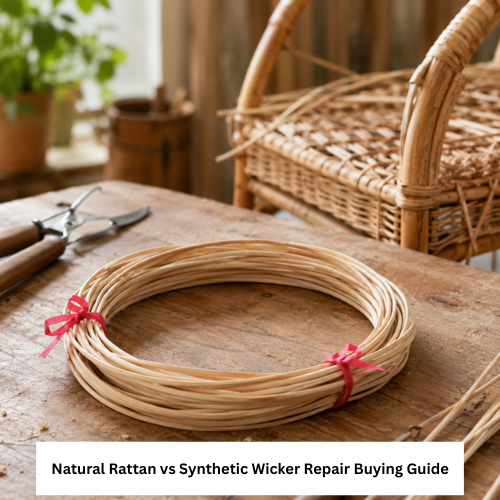
Choosing natural rattan or synthetic wicker for a repair depends on the original material, location, weave pattern, and expected exposure. The two materials can look similar in photos but differ in flexibility, preparation, weather resistance, finishing, and long term care.
Do not mix materials only because the color appears close. Cane weaving supplies buyers should inspect an undamaged strand and confirm whether it is plant based reed, coated paper, vinyl, polyethylene, or another synthetic material.
Natural Rattan and Synthetic Wicker Compared
Plant based rattan may be supplied as peel cane, reed, binder cane, or prewoven webbing. Synthetic wicker is manufactured in strips or meshes and is commonly used where moisture and outdoor exposure are concerns.
| Feature | Plant based rattan | Synthetic wicker | What to verify |
| Appearance | Organic variation and traditional texture | More uniform color and profile | Match the existing furniture |
| Preparation | May require controlled soaking | Usually installed dry or shaped as directed | Follow exact instructions |
| Outdoor use | Needs suitable protection and care | Often selected for outdoor pieces | Product exposure guidance |
| Finishing | May accept approved stains or finishes | Usually purchased in a finished color | Test before applying products |
| Repair match | Best for original natural cane or reed | Best for original synthetic weave | Width thickness shape and flexibility |
Choosing Plant Based Rattan for Repair
A natural rattan webbing roll may suit chair backs, cabinet panels, and furniture that originally used open weave cane. Verify the mesh pattern, width, length, edge condition, and installation method.
This plant based material can be a good wicker repair material for indoor pieces where an authentic texture matters. It may also blend with existing natural reed after suitable finishing, but color results are not guarantee.
Use clean water and the preparation time recommended for the specific product. Avoid oversoaking and let repaired furniture dry completely before finishing or use.
Choosing Synthetic Wicker for Repair
The synthetic rattan weaving material compared for repairs where the original piece uses manufactured wicker. Confirm the strip profile, color, flexibility, and indoor or outdoor suitability.
A plastic rattan webbing roll may suit furniture panels that use a prewoven synthetic mesh. Measure the opening pattern and usable panel area, and verify how the edges should be secured.
The Phifertex PVC wicker fabric offers another outdoor oriented material format to review. Check whether the weave style, mounting method, and exposure guidance match the furniture being repaired.
Synthetic wicker often handles moisture differently from natural reed, but it is not maintenance free. Sun, heat, cleaners, and repeated flexing may still cause fading, cracking, or brittleness.
The synthetic wicker webbing listing provides an external example for comparing a manufactured mesh with natural material options.
Compatibility Setup and Safety
Identify the old material before removal and photograph the over under pattern. Measure width, thickness, profile, spacing, and color from an intact area rather than a stretched broken end.
When plant based reed is use in a synthetic frame, or synthetic wicker is used in an older natural piece, the difference in flexibility and expansion may create an uneven repair. Match the original material whenever possible.
Wear eye protection when removing staples, tacks, or old spline, and use gloves when handling sharp cut ends. Do not heat synthetic wicker with an open flame, and use adhesives only with suitable ventilation.
Common Repair Problems
If natural material cracks while bending, it may be too dry, too thick for the curve, or prepared incorrectly. Stop and check the product directions rather than forcing it.
If synthetic strips twist or buckle, check the profile direction, tension, and corner radius. A strip that is too wide or thick may not follow the original pattern.
When comparing plant based reed with synthetic wicker, order a sample or small quantity first when color and texture are important. Verify return rules because cut or soaked material may not be returnable.
Cleaning and Long Term Care
Dust plant based rattan gently and keep it away from standing water, direct heat, and extreme dryness. Use only cleaning and finishing products approved for the material.
Clean synthetic wicker with the method recommended by its manufacturer and rinse away residue when instructed. Inspect outdoor furniture for cracked strips, loose fasteners, and frame corrosion.
Material Buying Checklist
Before choosing natural rattan or synthetic wicker, check these points.
- Identify the existing material and weave pattern
- Measure width thickness profile spacing and repair length
- Match color texture flexibility and finish
- Confirm indoor outdoor and moisture compatibility
- Check soaking shaping fastening and adhesive instructions
- Review tool safety ventilation and sharp edge risks
- Confirm cleaning drying and storage requirements
- Check warranty return policy and cut material restrictions
- Verify matching replacement colors and parts are available
- Review delivery packaging for bent or crushed material
- Verify before buying when material composition is unclear
Conclusion
Natural rattan is usually the better match for traditional indoor cane and reed furniture, while synthetic wicker may suit manufactured outdoor pieces. The correct choice depends on the original strand profile, exposure, installation method, and maintenance needs.
FAQ
Is Rattan the Same as Wicker?
No. Rattan is a material, while wicker describes a weaving method that can use natural or synthetic materials.
Is Synthetic Wicker Better Outdoors?
It is often designed for outdoor use, but buyers must verify the specific product exposure guidance.
Can Synthetic Wicker Replace Plant Based Reed?
It may fit some decorative projects, but differences in profile, tension, and appearance can make the repair incompatible.
Can Rattan Be Painted or Stained?
Some products may accept approved finishes, but test a sample and follow the material instructions.
How Can I Tell Which Material I Have?
Inspect an undamaged cut end, texture, flexibility, color consistency, and product records, or ask a repair specialist.
