
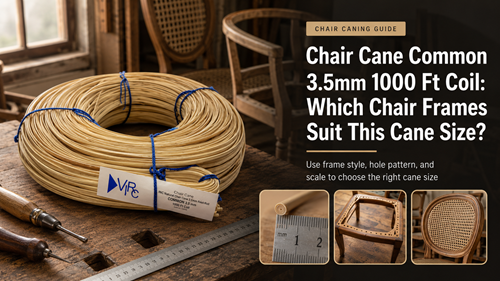
Chair Cane Common 3.5mm 1000 Ft Coil is a substantial strand size intended for hand-caned furniture with perimeter holes large and widely spaced enough to accept common cane without crowding. Choosing by the chair’s hole diameter and center-to-center spacing is more reliable than choosing by seat size alone.
A thousand-foot coil is also a workshop quantity. It makes sense when several compatible chairs are waiting for repair or when a restorer wants one consistent lot of material. Before buying bulk, inspect every frame and confirm that the 3.5mm strand matches the original construction.
Where Chair Cane Common 3.5mm 1000 Ft Coil Fits Best
Hand caning depends on a relationship between strand width, hole diameter, hole spacing, frame thickness, and weaving pattern. A strand that is too fine can look weak and leave large visual gaps; one that is too large can crowd the holes and make later weaving steps difficult.
Inspect the underside of the seat for old knots, plugs, or surviving cane. Measure several holes because worn holes may be enlarged. Then measure center-to-center spacing between neighboring holes on a straight section of the frame.
Common 3.5mm cane is generally associated with larger traditional seats and more generous hole spacing. The correct match should move through the holes without shaving the strand edges or forcing the frame wood apart.
Match Common Cane To Holes, Spacing, And Seat Scale
Confirm 3.5mm Fits The Original Construction
Use 3.5mm chair cane applications as a reference point for the material format, then compare it with the chair’s actual hole spacing.
If the original cane is present, measure an undamaged flat section rather than a frayed end. Old material can dry narrower or swell irregularly near knots.
Compare Common Cane With Smaller Sizes
Understanding common cane strand thickness is easier when you compare the same size in a smaller project quantity.
A 270-foot coil can be practical for a single compatible chair, while a 1000-foot coil is better suited to repeat work or several seats.
Do Not Judge Only By Hole Diameter
Choosing large hole chair caning material requires checking center spacing and frame geometry as well as whether the strand physically passes through the hole.
A large hole with very close spacing can still become crowded as horizontal, vertical, and diagonal layers build through the same opening.
Plan Bulk Material Around Real Projects
Good bulk cane coil planning begins with a list of chair sizes and cane requirements rather than a generic feet-per-seat estimate.
Wide seats, deep seats, complex patterns, waste at damaged strands, and learning curves all affect consumption. Keep a reasonable contingency instead of planning to use every foot.
Check Binder Cane Separately
The supplied binder cane for common seats should be evaluated as a finishing strand that covers and secures the perimeter holes after weaving.
Binder width and flexibility need to suit the frame. Store it straight and protected from excessive drying so it remains workable when the seat is ready to finish.
Use A Size Comparison Before Committing
A careful cane diameter selection considers cane profile, frame holes, and the type of caning rather than treating millimetres as the only decision.
If two sizes seem plausible, test short prepared strands through several representative holes before cutting material for the full seat.
Frame Features That Suggest A Common-Cane Size
Use these observations as a screening tool, then verify the actual dimensions on the chair.
| Frame Observation | What It Suggests | Next Check |
|---|---|---|
| Large perimeter holes | Common cane may fit | Measure center spacing |
| Wide spacing between holes | Larger strand may look proportional | Check original cane remains |
| Small delicate frame | 3.5mm may be visually heavy | Compare 2.5–3mm sizes |
| Multiple passes crowd holes | Strand may be too large | Test later pattern layers |
| Several matching chairs | Bulk coil may be economical | Confirm all frames use same size |
Estimate A 1000-Foot Coil For Multiple Repairs
List each chair and record seat width, depth, hole count, hole spacing, and selected strand size. A written inventory prevents a bulk purchase from being assigned to chairs that actually need finer cane.
Bulk Cane Planning Checklist
- Inspect every chair frame
- Measure representative hole diameters
- Measure center-to-center hole spacing
- Confirm hand-caned construction
- Compare surviving original strand
- Count planned seats
- Allow for learning and damaged pieces
- Protect unused cane from excessive dryness
- Keep binder cane labelled separately
After each chair, record the approximate material consumed. Your own workshop history becomes a more useful estimator than a single generic rule because your seat sizes and weaving habits are consistent.
When Common 3.5mm Cane Is Too Large
Warning signs include strand edges scraping through holes, difficulty fitting later diagonal passes, holes packed solid before finishing, or a visually heavy weave on a delicate frame. Forcing the cane can damage both the strand and the wooden hole edges.
Do not enlarge original chair holes simply to make an oversized cane purchase work. The material should match the frame, not the other way around.
The Canadian Conservation Institute describes cane as the outer skin of rattan used for chair seats and explains how moisture changes the flexibility of plant materials in its basketry and plant materials reference.
Let The Chair Frame Choose The Cane Size
Chair Cane Common 3.5mm 1000 Ft Coil is a strong bulk choice when several hand-caned frames genuinely use common-size strands. Confirm the holes, spacing, surviving cane, and pattern before committing.
A 1000-foot coil saves workshop interruptions only when the size is correct. Careful measurement protects the chairs and prevents a large quantity of material from becoming unusable inventory.
Frequently Asked Questions
Is 3.5mm cane suitable for every hand-caned chair?
No. Fine and medium frames may require smaller strand sizes. Measure hole diameter, spacing, and original cane first.
How do I know if the holes are too small?
The prepared strand should pass without shaving, crushing, or forcing the wood. Remember that multiple pattern layers must share each hole.
Is 1000 feet enough for several chairs?
It can be, but seat size, pattern, waste, and experience change consumption. Plan from your actual chair list.
What is binder cane used for?
Binder cane covers and finishes the perimeter holes after the woven seat is complete.
Should I enlarge holes to use 3.5mm cane?
No. Preserve the chair frame and choose a cane size that suits the original hole system.
