
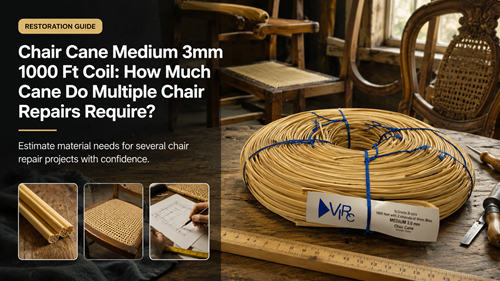
Chair Cane Medium 3mm 1000 Ft Coil is a workshop-size supply for hand-caned chairs that genuinely use medium strand cane. The question is not simply how many seats a thousand feet can cover. Seat area, perimeter hole count, weaving pattern, strand waste, broken pieces, and the caner’s experience all change consumption.
For several repairs, create a chair-by-chair material plan before opening the bulk coil. Confirm that every frame takes 3mm cane, estimate each seat separately, and keep a contingency for damaged strands and finishing. That approach is more dependable than dividing 1000 feet by a single generic seat estimate.
How To Plan Chair Cane Medium 3mm 1000 Ft Coil Across Several Seats
Medium cane often falls between fine and common sizes in both visual weight and hole requirements. A group of chairs can look similar while still using different strand sizes, especially when pieces came from different manufacturers or repair histories.
Before allocating material, inspect each chair for hand-caned perimeter holes, surviving original cane, and binder details. A pressed-cane groove requires webbing and spline instead, so it should be removed from the bulk-strand calculation entirely.
Then group the verified 3mm chairs by seat size and pattern. The larger the seat and the more complex the weave, the greater the length and handling waste.
Estimate Medium Cane By Project, Not By Guesswork
Start With The Number Of Verified Medium-Cane Frames
A useful 3mm chair cane quantity plan begins only after the chair holes and original strand confirm medium cane.
Do not include a chair just because the seat dimensions look similar. Different hole systems can require different strand sizes even within a matching-looking set.
Compare Bulk And Project-Size Coils
A medium cane bulk coil makes the most sense when multiple confirmed repairs are queued.
For one uncertain seat, a smaller coil or kit can limit waste and provide a useful consumption benchmark before a larger purchase.
Build A Per-Seat Estimate
A multiple chair seat material estimate should consider seat width, depth, hole count, number of pattern steps, and experience level.
Record the amount reserved for each chair and keep a separate contingency pool. This prevents an oversized first project from consuming the material planned for later seats.
Understand What A Thousand Feet Represents
A 1000 foot caning supply is best treated as flexible inventory rather than an exact seat count.
Some length is lost to starting tails, joins, damaged strands, and pieces that are too short for the next path. Efficient cutting improves yield without eliminating that normal waste.
Verify Hole Spacing Before Assigning 3mm
The medium strand hole spacing must leave enough room for all pattern passes to share each hole.
A strand that fits the first vertical pass can still be too large once horizontal and diagonal layers accumulate.
Manage Bulk Cane Like Workshop Stock
Good workshop cane inventory means labelling size, keeping binder separate, protecting the coil from extremes, and recording what was used on each repair.
Do not mix leftover fine, medium, and common cane in one unmarked container. Similar dry strands are easy to confuse until the wrong size reaches a chair.
Bulk Coil Planning Worksheet
A simple project log turns each completed chair into better data for the next estimate.
| Chair | Frame Check | Seat Scale | Planned Allowance |
|---|---|---|---|
| Chair A | 3mm verified | Small/medium | Project estimate + modest contingency |
| Chair B | 3mm verified | Medium | Use actual Chair A consumption as reference |
| Chair C | Not yet verified | Unknown | Do not allocate cane yet |
| Matching set | Verify each frame | Similar dimensions | Track one pilot chair before cutting all strands |
| Workshop reserve | Known 3mm work only | Mixed | Keep separate from project allocations |
Track Material Use As Each Chair Is Completed
Before soaking material, cut only what the current weaving step requires. Leaving the whole bulk coil wet or tangled creates unnecessary handling and makes inventory harder to control.
Multi-Chair Inventory Checklist
- Verify 3mm on every frame
- Record seat width and depth
- Count or estimate perimeter holes
- Choose one pilot chair
- Reserve binder separately
- Measure planned working lengths
- Track damaged and short offcuts
- Record actual material consumed
- Update remaining inventory after each seat
If the first chair uses more than expected, adjust the remaining plan immediately. Bulk material is valuable because it gives flexibility; that advantage disappears when all of it is pre-cut around an inaccurate estimate.
Bulk-Buying Errors That Create Shortages
The largest planning mistake is assuming every chair in a set is identical without measuring. Another is counting only the visible woven area and ignoring tails, joins, perimeter work, practice pieces, and unusable damaged lengths.
Avoid soaking or cutting excessive material in advance. Natural cane is easier to store and manage when the unused bulk remains dry, labelled, and protected.
The Canadian Conservation Institute’s basketry and plant materials resource explains how plant fibres respond to moisture and why controlled handling matters when working with cane and reed.
Let Actual Chair Data Drive The 1000-Foot Plan
Chair Cane Medium 3mm 1000 Ft Coil can support several repairs efficiently when every frame is verified and material use is tracked. Treat the coil as workshop inventory rather than a fixed number of seats.
Measure, weave one representative chair, record consumption, and update the remaining estimate. That turns a bulk purchase into a controlled restoration supply instead of a guess.
Frequently Asked Questions
How many chairs will 1000 feet of 3mm cane repair?
There is no universal count. Seat size, pattern, hole spacing, waste, and technique all affect consumption.
Should I cut material for all chairs at once?
No. Work one seat at a time and update the estimate from actual usage.
Can 3mm cane be used on any hand-caned frame?
No. Confirm the hole diameter, spacing, and original strand before assigning medium cane.
What should I do with short offcuts?
Save useful pieces for testing knots, binder transitions, or sample work, but keep them sorted by size.
Does binder cane come out of the 1000-foot weaving quantity?
Binder is usually supplied and planned separately. Keep it labelled so it is not consumed during the main weave.
