
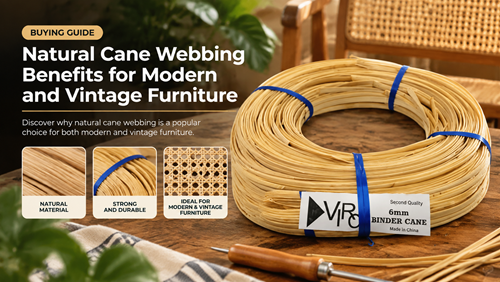
Natural cane webbing combines a light woven appearance with a material that has been used in furniture for generations. It works in both restoration and modern design because the pattern adds texture without visually filling the opening like solid wood or upholstery.
The benefits depend on using the material where it belongs. Natural rattan can be excellent for indoor chair backs, pressed-cane seats, cabinet panels, screens, and decorative inserts, but it should be selected for the frame, fastening method, and environment.
Why Natural Cane Webbing Works in Furniture
Use Eco Friendly Furniture Material Claims Carefully
When discussing eco friendly furniture material, separate the renewable origin of rattan from the complete product lifecycle. Harvesting, processing, shipping, finish, glue, and eventual replacement all influence environmental impact.
Choose material for durability and correct use rather than marketing language alone. A well-fitted panel that lasts is generally more useful than a poorly matched material that must be replaced quickly.
Match Vintage Furniture Restoration
For vintage furniture restoration, natural webbing can preserve the visual character of a chair or cabinet originally designed for rattan. Keep a sample of the old weave so the replacement mesh and colour can be compared.
Do not assume every vintage cane seat uses webbing. Traditional hand-caned chairs have drilled holes and require strand cane instead of a sheet.
Take Advantage of Breathable Cane Design
Open mesh creates a breathable cane design that lets light and air move through chair backs and cabinet doors. The open structure is one reason cane can feel visually lighter than a solid panel.
Airflow does not make natural rattan weatherproof. Indoor furniture should still be protected from persistent dampness, direct water, and extreme environmental swings.
Use Natural Rattan in Modern Design without Losing Function
Treat Sustainable Home Decor as a Design Choice
Natural sustainable home decor can add warmth to minimalist cabinets, headboards, and screens. Order enough material for matching panels because natural colour and strand character can vary between rolls.
Plan visible seams and pattern direction before cutting. A beautiful natural material still looks unfinished if neighbouring panels run in different directions.
Preserve Woven Furniture Style
A consistent woven furniture style depends on mesh scale, border treatment, and frame proportion. Large open weave can feel airy in a broad panel, while a finer pattern may suit smaller openings.
Mock up the pattern with paper or a small sample if the project changes from the original weave. The visual scale is easier to judge on the actual furniture than in an online product photo.
Understand Natural Materials before Finishing
Different natural materials absorb stains and finishes differently. Test any colour treatment on an offcut from the same roll rather than experimenting on the installed panel.
Avoid coating flexible cane with a finish that becomes brittle or blocks repair. Follow material and finish manufacturer instructions for compatibility.
Natural Cane Webbing Benefits and Limits
Use this comparison as a planning aid. The furniture frame, product specifications, and installation method should always take priority over a generic rule.
| Characteristic | Benefit | Planning Consideration |
|---|---|---|
| Open woven structure | Visual lightness and airflow | Pattern must be aligned |
| Natural rattan colour | Warm organic appearance | Normal roll-to-roll variation |
| Pre-woven format | Faster panel installation | Needs compatible fastening |
| Flexible when prepared | Can fit groove-style furniture | Do not over-soak or crease |
| Repairable system | Spline cane can be replaced | Use reversible installation materials |
Handle Natural Webbing as a Flexible Material
Before You Commit to the Final Cut or Installation
- Store loosely rolled and dry
- Keep the visible face identified
- Test finish on an offcut
- Measure pattern direction before cutting
- Avoid sharp folds
- Use the fastening method designed for the frame
- Let wet-installed cane dry fully
- Clean gently after installation
The chair seat weaving overview shows where spline cane webbing fits among other traditional woven seat methods and why frame construction matters.
Keep measurements, product labels, and a small offcut after the project. Those records make future maintenance or a matching second repair much easier than trying to identify the material years later.
Plan the Project with Fewer Surprises
Natural cane webbing brings texture, airflow, and a traditional rattan appearance to both new and old furniture. Its best qualities appear when the weave scale, frame, fastening method, and indoor environment are all appropriate.
Treat it as a natural structural or decorative material rather than a generic fabric sheet, and plan the installation before making the first cut.
Frequently Asked Questions
Is natural cane webbing suitable for outdoor furniture?
Natural rattan is generally best protected from prolonged moisture and weather exposure. Use material specifically rated for the intended environment.
Does natural cane webbing change colour?
Natural material can develop colour variation and patina over time. Exposure, finish, and care affect the result.
Can I stain cane webbing?
Many natural cane products can be coloured, but always test an offcut and follow compatible finishing instructions.
Is open mesh cane strong enough for a seat?
Use only material and a frame designed for structural seating. Decorative cane sheets are not automatically suitable for load-bearing seats.
Why does one roll look slightly different from another?
Natural rattan varies in colour, strand texture, and tone. Order related panels together when a close match matters.
