
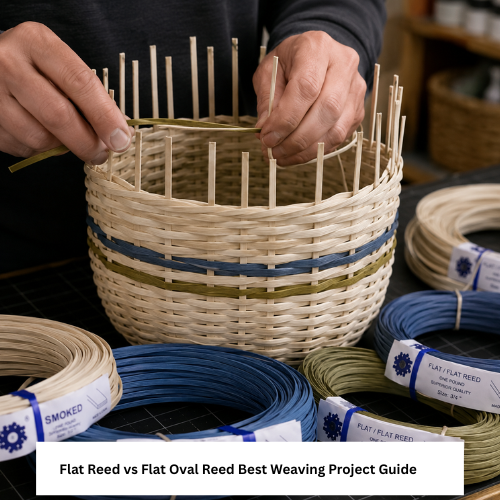
Choosing flat reed or flat oval reed depends on the project’s pattern, desired surface shape, required flexibility, and whether the strand will form a broad woven area or a raised decorative detail. Although both profiles are used in basketry and furniture work, they do not create the same texture or finished appearance.
Flat material has a broad face and relatively even thickness. Flat oval material has a rounded or crowned face with a flatter underside. That difference affects orientation, bending, rim construction, pattern definition, and how closely a repair matches the original weave.
cane weaving supplies buyers should measure the existing strand or follow the project pattern before ordering. Width, thickness, profile, coil quantity, natural color, and soaking instructions should all be verified.
| Feature | Flat material | Flat oval material | What to verify |
| Cross-section | Broad and relatively even | Rounded face with flatter underside | Actual profile and thickness |
| Finished appearance | Low, smooth woven surface | Raised or softly rounded surface | Which face should remain visible |
| Common basket use | Bases, sides, and broad weaving | Rims, borders, handles, and accents | Pattern requirements |
| Furniture use | Seats, panels, wrapping, and repair | Edges, decorative rows, and selected repairs | Match to original strand |
Basket Weaving Uses
Basket Sides
Flat material works well for many over-and-under wall patterns. Keep the finished side facing outward and maintain consistent tension.
A listed three-eighths-inch basket reed can help buyers compare coil format and project use, but verify its current width, weight, approximate length, and color before ordering.
Rims and Borders
Flat oval material is often selected when the pattern needs a rounded visible edge.
A quarter-inch flat oval material listing can help buyers compare a crowned profile for rims, borders, and repair work, but verify the dimensions and package contents before buying.
Do not substitute it for a structural rim component unless the pattern permits that use.
Furniture Weaving and Repair Uses
Furniture restoration requires a close match to the original profile and pattern.
Read a furniture weaving material guide before replacing large sections of a chair, stool, cabinet, or wicker panel.
Check whether the original strand is:
- Natural plant material
- Synthetic outdoor wicker
- Flat
- Flat oval
- Half round
- Prewoven webbing
- Wrapped around a frame
- Installed under tension
- Stained or painted
A broad flat strand may fit a seat or panel, while a rounded profile may be required for a finished edge or decorative row.
Do not use a decorative strand where the furniture design requires structural support. Repair loose joints, cracked rails, rust, and frame damage before weaving.
Pattern and Scale Compatibility
The reed size changes the scale of the pattern.
A wider strand can:
- Reduce the number of rows
- Create a heavier visual appearance
- Increase bending resistance
- Cover more surface
- Require wider spacing
A narrower strand can:
- Increase the number of rows
- Create finer detail
- Require more material length
- Leave gaps if substituted incorrectly
- Take longer to weave
Review a basket weaving materials guide when comparing reed profiles, supporting stakes, tools, and pattern requirements.
Follow the pattern’s specified size whenever possible. When resizing a project, test a small sample before preparing the full coil.
Cleaning and Maintenance
Clean finished weaving with a soft brush or dry cloth. Avoid soaking baskets or furniture unless the care instructions permit it.
For localized dirt:
- Use a material-compatible method.
- Test an inconspicuous area.
- Avoid harsh chemicals.
- Blot rather than scrub aggressively.
- Dry with good airflow.
Inspect furniture repairs for loose ends, broken strands, and tension changes. Address damage before adjacent rows loosen.
Store unused coils:
- Clean and dry
- Away from direct sunlight
- Away from high humidity
- Protected from pests
- Loosely coiled
- Labeled by profile and size
A listing for Rockler half-inch flat reed can help buyers compare product naming and coil presentation, but verify the current weight, approximate length, natural variation, and seller details before ordering.
Conclusion
Flat reed is usually the better choice for broad basket surfaces, seat patterns, and low-profile weaving, while flat oval material can create rounded rims, raised borders, and decorative furniture details. Match the profile, width, thickness, and finished face to the pattern or original weave, and test preparation and bending on a spare strand before beginning the full project.
FAQ
Can flat and flat oval materials be substituted?
Sometimes, but the finished profile and spacing will change. Follow the pattern or match the original material whenever possible.
Which profile is better for basket rims?
Flat oval material is commonly used for rounded visible borders, but the correct choice depends on the rim pattern.
How do I identify the finished side?
Flat material often has a smoother face, while flat oval material has a clearly rounded face and flatter underside.
Should both profiles be soaked?
Natural material may need controlled moisture for flexibility. Follow the specific product or pattern instructions.
How should unused coils be stored?
Let them dry fully, keep them loosely coiled and labeled, and store them away from moisture, heat, sunlight, and pests.
