
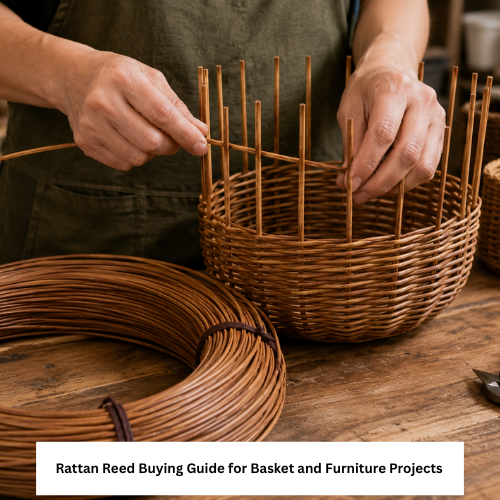
Choosing the right rattan reed begins with identifying the project, matching the strand profile to the original weave, and measuring the width or diameter before ordering. Basket bases, decorative sides, rims, chair panels, and wicker repairs may require different material shapes and sizes.
Natural reed can vary slightly in color, texture, and flexibility because it is a plant-based material. Buyers should check the product description, coil weight, and approximate length, strand profile, color, and intended application rather than choosing by appearance alone.
cane weaving supplies shoppers should also consider soaking requirements, storage space, tools, replacement availability, delivery condition, and whether the material can be returned after the coil has been opened or cut.
How to Choose Rattan Reed for Your Project
Begin by inspecting the existing weave or project pattern. Determine whether the material is flat, flat oval, round, half round, or another profile.
The correct rattan reed should match the project’s visible width, thickness, flexibility, and structural purpose. A strand that is too wide may crowd the pattern, while one that is too narrow may leave gaps or provide insufficient support.
Identify the Project Type
Common applications include:
- Basket stakes and spokes
- Basket side weaving
- Basket rims and handles
- Decorative wrapping
- Chair-seat weaving
- Wicker furniture repair
- Cabinet and panel accents
- Small craft projects
- Sculptural weaving
A guide to rattan weaving supplies can help beginners understand the material, tool, and preparation choices involved in common projects.
| Reed profile | Common uses | Main advantage | Possible limitation | What to verify |
| Flat | Basket sides, seats, panels, and wrapping | Covers a wider area with each pass | May crack if bent sharply while dry | Width, thickness, smooth side |
| Flat oval | Basket rims, decorative rows, and furniture details | Rounded face creates a softer finished edge | Orientation must remain consistent | Width, crown shape, underside |
| Round | Stakes, spokes, handles, and structural weaving | Bends in several directions | Diameter changes can alter pattern spacing | Exact diameter and flexibility |
Flat, Round, and Flat Oval Uses
Flat Reed
Flat material is commonly used where broad coverage and a defined woven surface are needed. It may work for basket sides, seat patterns, wrapping, and selected furniture-repair projects.
The smooth side generally faces outward in projects where surface appearance matters. Check both sides before weaving because natural material may have a more finished face.
Round Reed
Round material is commonly use for spokes, stakes, handles, and patterns that need to curve in several directions.
Read a round reed weaving guide when deciding whether a round profile is appropriate for basket structure, decorative work, or furniture making.
Measure diameter with a caliper when possible. A small change in diameter can affect spacing, flexibility, and the amount of material required.
Flat Oval Reed
Flat oval material has a rounded face and a flatter underside. It may be useful for rims, borders, decorative rows, and areas where a raised finish surface is desired.
Keep the rounded face oriented consistently throughout the weave. Twisted sections can create an uneven appearance.
Choosing Reed for Basket Weaving
Basket patterns often specify the profile, size, and approximate quantity needed. Follow the pattern when available rather than substituting based only on visual similarity.
A listed basket weaving reed coil can help buyers compare material presentation and intended use, but verify the current size, weight, color, and package contents before buying.
Consider:
- Basket diameter or base size
- Number of stakes
- Spacing between stakes
- Wall height
- Weave pattern
- Rim construction
- Handle design
- Expected waste
- Whether multiple matching coils are needed
Order enough material from the same listing or batch when consistent color is important. Natural variation more noticeable when coils are purchased at different times.
Choosing Reed for Wicker Furniture Repair
Furniture repair requires matching both appearance and function. A decorative strand may not be suitable for a weight-bearing seat, and a structural strand may be too stiff for a tight decorative curve.
Review a wicker furniture repair guide before removing extensive sections of an original weave.
Check:
- Whether the furniture is indoor or outdoor
- Whether the original material is natural or synthetic
- Whether the section is decorative or structural
- Frame condition
- Attachment method
- Existing finish or stain
- Strand profile and dimensions
- Pattern direction
- Tension requirements
Natural material may not be the correct replacement for synthetic outdoor wicker. Verify the existing material before ordering.
A damaged or unstable frame repaired before new weaving is installed. Reed should not be expected to correct loose joints, cracked wood, rusted metal, or broken support rails.
Cleaning and Maintenance
Dust finished natural weaving with a soft brush or dry cloth. Avoid saturating furniture or baskets during routine cleaning.
For spills:
- Blot promptly.
- Use only a cleaning method suitable for the material.
- Avoid harsh solvents.
- Allow the item to dry with good airflow.
- Watch for loosening or discoloration.
Inspect repaired areas periodically for broken strands, loose ends, or changes in tension. Address small problems before they spread through the pattern.
Store unused material in a dry, ventilated area away from direct sunlight, excessive heat, moisture, and pests. Keep each size labeled.
A listing for natural rattan weaving reed can help buyers compare coil presentation and seller details, but verify the current width, length, weight, material, and package contents before ordering.
Conclusion
The best rattan reed is the profile and size that matches the original weave, supports the project’s structure, and prepared without cracking or excessive twisting. Measure carefully, order enough matching material, inspect it before use, and test preparation and finishing methods on a spare section before completing the project.
FAQ
Should reed be soaked before weaving?
Many natural weaving materials need moisture for flexibility, but preparation time varies. Follow the product or project instructions.
Is flat or round material better for baskets?
Neither is universally better. Flat material often forms broad woven surfaces, while round material is frequently used for stakes, spokes, and handles.
Can natural reed repair outdoor furniture?
Only when it matches the original material and intended environment. Many outdoor pieces use synthetic wicker rather than natural material.
How do I measure replacement material?
Measure an intact section with a ruler or caliper and record the profile, width, thickness, or diameter.
Can unused reed be stored after soaking?
Allow it to dry fully with good airflow before storage. Do not seal damp material in a container.
