
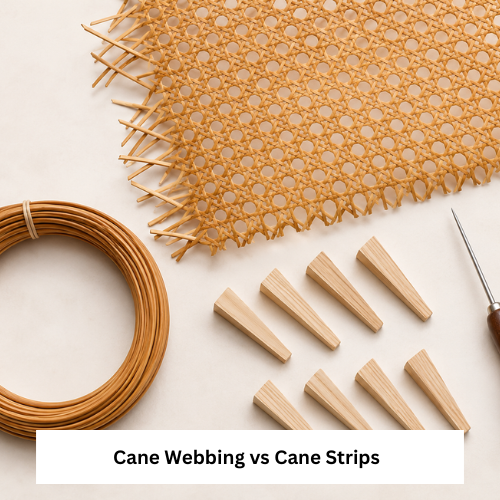
Choosing between cane webbing and cane strips depends on your project type, chair design, repair method, and the look you want. Cane webbing is usually a pre woven sheet, while cane strips or strands are use for hand caning, weaving, wrapping, or some repair projects.
For chair repair, the most important step is identifying how the original seat was made. A grooved chair often needs sheet webbing and spline, while a drilled-hole chair usually needs strand cane for hand weaving.
Cane Webbing vs Cane Strips: Main Difference
Cane webbing is pre woven cane material sold in sheets or rolls. It is commonly use for pressed cane chairs, cabinet panels, chair backs, and decorative furniture projects.
Cane strips are individual pieces use for hand caning, wrapping, basket work, or weaving patterns by hand. They require more time and skill because the pattern is made during the repair.
Cane Webbing Material Guide
Cane webbing can save time because the pattern is already woven. This makes it useful for pressed cane chair repair, furniture panels, cabinet doors, headboards, and decorative inserts.
Before buying, check mesh size, roll width, color, sheet length, material style, and whether it fits your groove or panel opening. If the product page does not confirm dimensions or usage details, verify before buying.
Cane Strips and Hand Caning Cane
Cane strips are better when the project requires hand weaving through holes or around a frame. They use for traditional chair caning, basket weaving, or decorative craft projects.
Hand caning usually needs the right strand size for the hole spacing. If the strand is too thick, it may not pass through easily. If it is too thin, the finished weave may not look or feel right.
| Feature | Cane Webbing | Cane Strips | What to Verify Before Buying |
| Form | Pre woven sheet or roll | Individual strands or strips | Width, length, pattern, strand size |
| Best for | Pressed cane chairs and panels | Hand caning and weaving | Chair frame style |
| Skill level | Easier for many beginners | More detailed and time-consuming | Instructions and project difficulty |
| Tools needed | Spline, wedges, chisel, glue | Pegs, awl, strands, pattern guide | Tool compatibility |
| Fit check | Groove and opening size | Hole spacing and strand size | Measurements before ordering |
| Common use | Chair backs, seats, cabinet panels | Traditional seat weaving | Original chair construction |
Pre Woven Cane for Pressed Chair Repair
Pre woven cane is useful when you want to replace a sheet-style cane seat or chair back. The old material is usually held in a groove with reed spline.
Check the groove width, spline size, mesh pattern, and extra material needed around the edges. If the chair is antique or fragile, avoid forcing material into the groove.
Rattan Webbing and Cane Webbing Rolls
Rattan webbing is commonly use in furniture, cabinets, decorative panels, and some chair repair projects. It may come in different patterns, widths, and colors.
A cane webbing roll can be helpful if you need material for multiple panels or larger repairs. Check roll width and project measurements carefully before buying.
You can also compare a rattan webbing roll example if you want to understand common roll-style material before choosing.
Tools, Setup, and Compatibility Notes
For webbing projects, you may need a soaking container, scissors, wedges, spline, glue, and a tool to clean the groove. For hand caning, you may need an awl, pegs, strand cane, and a weaving pattern guide.
Work slowly and test fit before applying glue. If the cane is wet, handle it gently because forcing it can cause breaks or uneven tension.
Safety and Handling Tips
Use sharp tools carefully when removing old material. Old spline, glue, and brittle cane can crack or splinter.
Wear eye protection when cleaning grooves or pulling out broken cane. Keep tools away from children, and do not place wet cane near heat to speed drying unless the product directions allow it.
Common Buying Mistakes
One common mistake is buying cane webbing for a hand-caned chair. Another is ordering cane strips when the chair needs a pre woven sheet.
Do not buy by product photo alone. Match your material to the chair construction, opening size, groove width, or hole spacing.
Cleaning, Care, and Storage
Store unused cane material in a dry area away from direct heat. Keep rolls flat or loosely rolled so they do not kink.
Clean finished cane gently with a dry or slightly damp cloth. Avoid soaking finished furniture unless the material care instructions say it is safe.
Troubleshooting Material Fit Problems
If cane webbing will not fit the groove, check whether the spline size or material thickness is wrong. If cane strips break during weaving, they may be too dry, too thick, or pulled too hard.
If the finished pattern looks uneven, check tension and spacing. Beginners should practice on a small sample before working on a valuable chair.
Practical Buying Checklist
- Identify whether the chair uses a groove or drilled holes.
- Measure the seat opening, panel opening, groove width, or hole spacing.
- Choose cane webbing for sheet-style pressed cane projects.
- Choose cane strips for hand caning or strand weaving.
- Verify mesh pattern, roll width, strand size, and color.
- Check required tools such as spline, wedges, awl, pegs, and chisel.
- Review setup, soaking, and drying instructions.
- Check safety needs when removing old material.
- Review warranty, return policy, delivery, and support.
- Confirm replacement material availability.
- Verify before buying if any size or compatibility detail is unclear.
Conclusion
Cane webbing is usually the better choice for pressed cane chairs and panel-style repairs, while cane strips are better for hand caning and strand-based weaving. Measure carefully, match the material to the chair construction, check tools and fit, and verify product details before buying.
FAQ
What is cane webbing used for?
Cane webbing is use for press cane chair seats, chair backs, cabinet panels, furniture inserts, and decorative projects.
What are cane strips used for?
Cane strips are use for hand caning, weaving, wrapping, basket work, and some traditional chair repairs.
How do I know which material my chair needs?
Check the chair frame. A groove usually means cane webbing and spline, while drilled holes usually mean hand caning cane.
Is cane webbing easier than hand caning?
For many beginner, cane webbing is easier because the pattern is already woven. Hand caning takes more time and skill.
What should I measure before buying?
Measure the opening, groove width, hole spacing, webbing width, strand size, and any extra edge allowance needed.
