

Product Details
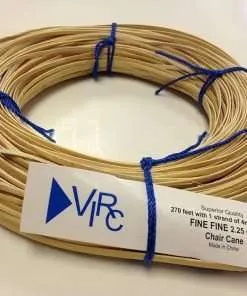
- Product type: Fine strand chair cane with binder cane
- Main cane size: Fine 2.5mm
- Main cane length: 270 ft coil
- Binder cane included: 1 strand of 4mm binder cane
- Suggested use: Hand-caning chair seats
- Recommended chair type: Chairs with drilled holes around the seat frame
- Hole guidance: For 3/16” drilled holes spaced about 9/16” center to center
- Product dimensions: 6 x 6 x 1.2 inches
- Shipping weight: 4 ounces
- Recommended tools: Caning chisel and C.S. Osborne caning tool for hand-caning repair
Best Use and Compatibility
This fine 2.5mm chair cane is a good option for smaller hand-caning repairs, single chair seats, and projects where the original cane size is fine rather than common or narrow-medium. The included binder cane strand is used around the outside edge after the seat pattern is woven.
For larger holes or wider spacing, compare this product with chair cane common 3.5mm 270 ft coil before ordering.
If you need a larger supply for several chairs, chair cane common 3.5mm 1000 ft coil may be a better choice, depending on your chair’s hole size and spacing.
How to Check the Right Cane Size
Before buying, measure the diameter of the drilled holes and the spacing from the center of one hole to the center of the next hole. This product is listed for 3/16” drilled holes with about 9/16” center-to-center spacing.
Do not use this strand cane for pressed cane seats. Pressed cane seats usually have a groove around the frame and need cane webbing, spline, and installation tools instead of individual chair cane strands.
If your project needs extra edge material, 4mm binder cane can be useful for finishing the border cleanly.
Installation Notes
Soak the cane until it becomes flexible enough to bend and weave without cracking. Avoid soaking it for too long, because overly soft cane can stretch and become harder to control while weaving.
Remove old cane from each drilled hole before starting the new seat. A caning chisel can help clean out broken cane ends, dried material, or old strand pieces from the chair frame.
For hand-caning work, the C.S. Osborne caning tool No.406 can help guide cane through the holes and reduce strain during repetitive weaving.
Care After Installation
Let the woven seat dry fully before regular use. Natural cane tightens as it dries, so using the chair too soon may affect the finished seat tension.
Keep the finished chair in a dry indoor space or a covered area. Avoid long exposure to direct sunlight, moisture, or high heat, because these conditions can dry out or weaken natural cane over time.