
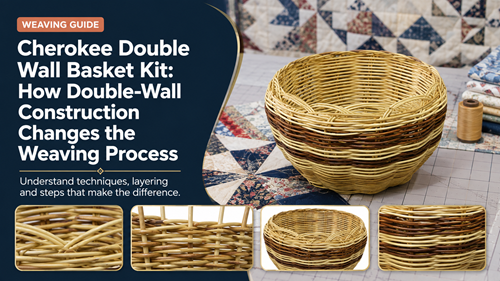
Cherokee Double Wall Basket Kit introduces a construction method in which one woven wall is paired with a second wall, creating a layered basket structure rather than a single exposed weave. The added layer changes how you manage stakes, spacing, tension, rim planning, and access to the inner surface as the basket grows.
For an intermediate basket maker, the key is to think ahead. A strand that looks harmless on the first wall can become trapped once the second wall closes the space, and small spacing errors are more visible when two layers must align. Organize materials before weaving and keep the inner shape stable throughout the project.
How The Cherokee Double Wall Basket Kit Changes The Build Sequence
A single-wall basket lets the maker see and correct both surfaces of the weave for most of the project. A double-wall design gradually hides parts of the first wall, so errors must be corrected earlier and material tails must be placed deliberately.
The second wall also changes the way the basket feels in the hands. Extra reed adds stiffness and visual depth, but uneven tension can pull the outer layer tighter on one side and distort the inner form. Consistent shaping is therefore more important than rushing through rows.
Before starting, sort stakes, weavers, rim material, and any contrasting pieces. If the kit instructions identify different lengths or sizes, keep them in labelled groups so a finishing element is not accidentally consumed during the first wall.
Double-Wall Basket Weaving Decisions That Matter Most
Understand The Two-Layer Structure Before You Start
The double wall basket technique depends on a first wall that is even enough to serve as the foundation for the second.
Read the full sequence before weaving. Knowing where the second wall begins helps you leave appropriate stake length and prevents early trimming that removes material needed later.
Follow The Kit Sequence Closely
The Cherokee basket kit steps are easier to understand when compared with another double-wall project that uses a similar layered concept.
Do not improvise the finishing order until you understand how the two layers connect. In double-wall work, the final rim may depend on elements that were established much earlier.
Keep The Inner Basket Shape Stable
A strong layered basket weaving structure starts with controlled stakes and even first-wall tension.
Support the inner form while the outer layer is added. If the first wall collapses inward, the outside weave can lock that distortion into the finished basket.
Measure Stake Gaps Repeatedly
Consistent reed wall spacing keeps the second wall from developing tight clusters and open gaps.
Check spacing at several heights instead of only at the base. Stake positions can drift as rows are packed and tension changes.
Treat The Kit As An Intermediate Project
An advanced basket kit construction is easier when the maker already understands basic stake control, packing rows, and rim preparation.
If this is your first basket, practice the same reed on a simple single-wall form before committing to the double-wall sequence.
Plan Finishing Before The Walls Close
Good double weave finishing includes handling plant fibres gently and avoiding unnecessary bending once they have dried into position.
Keep working ends accessible and follow the kit instructions for rim or lashing order. A clean finish depends on not trapping the wrong tail between layers.
Single-Wall And Double-Wall Workflow
The added wall changes both the weaving sequence and the way mistakes are corrected.
| Task | Single Wall | Double Wall |
|---|---|---|
| Shape control | One visible structure | Inner shape must stay stable while outer wall is added |
| Stake spacing | Correct throughout one wall | Must support two coordinated layers |
| Access to backs of rows | Usually open | Becomes limited as layers close |
| Tension errors | Often easier to correct | Can transfer distortion between walls |
| Finishing | One rim relationship | May join or coordinate two wall systems |
Organize Reed And Shape Before The Second Wall
Prepare a clean damp-towel area for reed that is ready to weave and a separate dry area for material that should not be soaked yet. Double-wall work becomes confusing when every length is mixed together.
Double-Wall Setup Checklist
- Read the complete kit sequence
- Sort stakes and weavers by size
- Mark material reserved for finishing
- Establish an even base
- Check stake spacing before the first wall
- Keep row packing consistent
- Support the inner wall shape
- Recheck spacing before the second wall
- Leave finishing ends accessible
Pause at the transition between walls and inspect the basket from every side. This is the best time to correct lean, oval distortion, or uneven row height before the outer layer makes those changes harder.
Problems That Appear When The Second Wall Begins
Over-tightening the outer wall can compress the inner basket and create a pinched silhouette. Uneven stake spacing can also multiply because the second layer follows the same irregular foundation.
Do not trim tails early simply because the first wall looks finished. The kit sequence may use those ends for connection, locking, or rim work later.
The Canadian Conservation Institute describes coiling, plaiting, wickerwork, cane, reed, and the moisture response of plant materials in its basketry and plant materials guidance.
Build The First Wall As The Foundation For The Second
Cherokee Double Wall Basket Kit becomes manageable when the first wall is treated as a precise structural foundation. Control spacing, shape, and tension before adding the outer layer.
The second wall rewards patience because it hides less-than-perfect preparation. Organize material, preserve access to finishing ends, and correct the shape before the layered structure is closed.
Frequently Asked Questions
Is a double-wall basket suitable for a complete beginner?
It is usually easier after completing at least one simple single-wall basket because stake spacing and tension need to be controlled before the second layer is added.
Why does the outer wall make the basket narrower?
The outer layer may be woven too tightly or the inner wall may not be supported. Reduce tension and recheck shape.
Should all reed be soaked at once?
No. Prepare only the material needed for the current step so unused pieces do not become overworked or tangled.
How do I keep the two walls even?
Measure stake spacing, pack rows consistently, and inspect the basket from multiple sides throughout the build.
When should I trim extra stakes?
Follow the kit instructions and trim only after you are certain the material is not needed for the second wall or finishing.
