
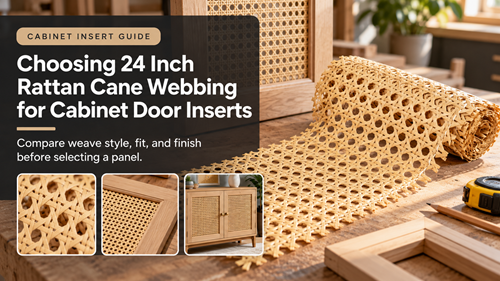
24 Inch Rattan Cane Webbing is a practical width for many cabinet doors because it can cover wider inserts while still leaving enough material for trimming and fastening behind the frame. The best choice depends on the actual opening, the hidden overlap available around it, the weave pattern, and how the door is constructed.
Decorative cabinet panels do not use the same installation rules as every chair seat. Some doors trap the cane between mouldings, some use staples or retaining strips on the back, and others use a routed groove. Inspect the existing door before deciding how much extra webbing to order.
How 24 Inch Rattan Cane Webbing Fits Cabinet Doors
Measure the Visible Opening and the Hidden Retaining Area
For cabinet cane panels, measure both the visible opening and the area behind the frame where the cane will be secured. A 20-inch visible opening may still need significantly more material if the cane must wrap behind a wide rail or sit beneath removable trim.
Record the largest width and height for each door. Cabinet openings that look identical can vary by a few millimetres, and those differences matter when several panels are being cut from one roll.
Compare Width and Length Separately
Listings for 24 inch rattan cane webbing sizes may share a 24-inch width but offer different roll lengths. Width determines whether the sheet can cover the panel; length determines how many inserts can be cut from the roll.
Create a cutting layout before ordering. Rotate pieces only when the weave looks correct in the new orientation, because some patterns have a visual direction that becomes obvious across adjacent cabinet doors.
Match the Weave to the Cabinet Style
Different 24 inch rattan cane webbing uses include cabinet inserts, chair backs, screens, headboards, and decorative furniture panels. A large open hexagonal weave creates a lighter appearance, while a denser pattern can hide more of the cabinet interior.
Compare the mesh scale against the width of the frame rails. Very large openings can look out of proportion on a small cabinet door, while a tiny pattern may appear visually busy on a wide panel.
24 Inch Rattan Cane Webbing Buying Guide for Cabinet Panels
Use the Project Layout to Estimate Quantity
A focused 24 inch rattan cane webbing buying guide should compare usable panel dimensions, not only roll price. Add each cut length, include trimming allowance, and leave enough reserve for one alignment correction or a natural defect.
If several doors must match, buy enough material in one order when practical. Natural rattan varies in colour and strand character, so one continuous roll is easier to coordinate than pieces purchased at different times.
Choose Material that Matches the Mounting Method
Browse cabinet cane panels materials with the cabinet construction in mind. Natural rattan webbing is common for indoor furniture, but the retaining method, exposure to moisture, finish, and desired colour can change the best product choice.
Inspect the back of an existing door before removing the old panel. Photograph staples, retaining strips, moulding, or groove details so you can rebuild the fastening system without guessing.
Install Decorative Panels Evenly
For practical cabinet cane panels installation tips, mark the centerline of the door and the cane before fastening. Secure opposite sides gradually so the pattern remains square to the frame instead of pulling diagonally.
Do not over-tension natural cane while it is wet. If the product requires soaking, follow the manufacturer directions and allow the panel to dry fully before judging the final tension.
24 Inch Cabinet Panel Planning Table
Use this table to separate the visible design dimensions from the material you actually need to cut.
| Planning Item | What to Measure | Buying Impact |
|---|---|---|
| Visible opening | Maximum inside width and height | Controls the finished appearance |
| Retaining overlap | Hidden fastening area behind frame | Adds required cut size |
| Roll width | Actual 24-inch usable width | Determines orientation and fit |
| Roll length | Total linear material available | Determines number of panels |
| Weave direction | Pattern orientation across doors | Keeps a cabinet set consistent |
| Mounting method | Staples, trim, groove, or retaining strip | Changes overlap and installation sequence |
Plan the Cabinet Set Before Cutting
Cabinet Insert Checklist
- Measure every opening separately
- Record hidden overlap
- Photograph the original fastening method
- Choose one weave orientation
- Lay out every cut on paper
- Inspect natural colour variation
- Mark panel centerlines
- Follow soaking directions
- Trim only after alignment is confirmed
Number the back of each cut and the matching cabinet door when several panels are involved. That prevents a slightly different-sized piece from being installed in the wrong opening.
Store unused rattan loosely rolled and dry. Sharp folds can create permanent creases that remain visible in a decorative cabinet panel.
Choose 24 Inch Rattan Cane Webbing by the Complete Panel Size
24 Inch Rattan Cane Webbing is useful for cabinet door inserts when the roll covers the visible opening plus the hidden area needed for fastening. Measuring only the opening can leave too little material for a clean installation.
Plan the cut layout, match the weave across related doors, and document the original mounting system before removal. Those steps make the final panels look more consistent and reduce waste from a wide roll.
Frequently Asked Questions
Is a 24-inch roll suitable for a 24-inch cabinet opening?
Usually not if the visible opening is exactly 24 inches wide, because installation normally requires additional material outside the opening for fastening and trimming.
Can I rotate cane webbing to save material?
Only when the weave looks correct in the rotated orientation. Check pattern direction across all matching doors before cutting.
Should natural cane be stretched as tight as possible when wet?
No. Follow the product instructions and use even placement rather than excessive wet tension. Natural cane typically tightens as it dries.
How do I make several cabinet panels match?
Use material from the same roll, keep the weave orientation consistent, and position the cuts side by side before installation.
Can cabinet cane webbing be installed with the same method as a chair seat?
Not always. Cabinet doors may use trim, staples, retaining strips, or grooves, while pressed-cane chair seats commonly use spline in a routed groove.
