
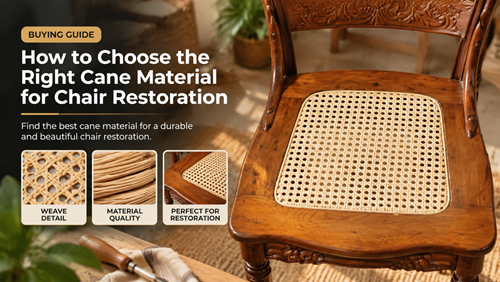
Choosing cane material for chair restoration is easier when the frame is treated as the specification. A chair with a routed groove needs a different material system from a chair with drilled holes, even when both finished seats have a familiar hexagonal appearance.
The restoration goal also matters. An antique chair may benefit from matching the original gauge and weaving method, while a modern cabinet-backed chair may use pre-woven material mainly for appearance. Measure the frame before removing every trace of the old work whenever possible.
Match Cane Material for Chair Restoration to the Original Construction
Replace the Same Structural System
A chair cane replacement should normally follow the chair’s original frame design. A grooved seat was engineered for pressed webbing and spline, while a drilled-hole seat relies on individual cane strands passing through the frame.
Changing methods can require permanent alteration to the frame and may reduce restoration value. Unless the chair is already heavily modified, matching the original system is usually the most predictable approach.
Use Pre-Woven Panels on Groove Frames
Groove-style chairs are designed for woven cane panels that are pressed into the channel and locked with reed spline. Measure the opening, groove width, and pattern before ordering a replacement sheet.
The groove must be clean and structurally sound. Leftover glue, broken spline, or compressed cane can distort the measurement and make a correctly sized replacement feel too tight.
Keep the Restoration Kit Complete
Organize furniture restoration supplies before the chair is disassembled. Cane, spline, wedges, a suitable chisel, sharp trimming tools, and the correct adhesive are easier to verify while the original seat is still available for comparison.
Label any reusable hardware and take close photos of corners, underside details, and spline joints. These references are valuable once the old material has been removed.
Select Gauge, Tools, and Natural Weaving Materials
Use Tools That Protect the Frame
Proper cane repair tools reduce the temptation to pry aggressively with a screwdriver or general woodworking chisel. Groove damage makes a new pressed-cane installation harder because spline needs a consistent channel.
Work gradually when removing old spline. Small controlled cuts and cleanup passes are safer than driving a tool deeply into the frame in one attempt.
Measure Antique Frames in Several Places
For antique chair repair, check hole diameter and centre-to-centre spacing at multiple points before selecting strand cane. Older drilling can vary slightly around the seat, and the original cane may have stretched or broken over time.
Use the smallest appropriate gauge that matches the frame and historical construction rather than choosing a thicker strand simply because it feels stronger in the hand.
Understand the Material Before Soaking
Different natural weaving materials respond differently to moisture. Strand cane, reed spline, and sheet cane are all rattan-based materials but are prepared and handled for different functions.
Follow the material instructions for soaking. Over-soaking can make reed fuzzy or weak, while dry material can crack at bends and corners.
Chair Restoration Material Match
Use this comparison as a planning aid. The furniture frame, product specifications, and installation method should always take priority over a generic rule.
| Frame Clue | Likely Material | Key Measurement |
|---|---|---|
| Routed perimeter groove | Pre-woven cane webbing plus spline | Opening and cleaned groove width |
| Drilled holes around frame | Strand cane plus binder | Hole diameter and hole spacing |
| Decorative framed panel | Webbing sheet or roll | Panel opening and fastening method |
| Damaged groove | Repair frame before caning | Groove depth, width, and integrity |
| Unknown old pattern | Keep sample before removal | Mesh, gauge, colour, orientation |
Document the Chair Before Removing Old Cane
Before You Commit to the Final Cut or Installation
- Photograph the top and underside
- Mark front, back, left, and right
- Measure the opening before disassembly
- Record groove or hole dimensions
- Keep a sample of the old weave
- Inspect frame joints for looseness
- Check whether refinishing is needed first
- Order cane only after the frame is identified
The woven chair seat identification guide illustrates the difference between traditional hole-to-hole caning and spline cane webbing, which is the most important distinction before ordering material.
Keep measurements, product labels, and a small offcut after the project. Those records make future maintenance or a matching second repair much easier than trying to identify the material years later.
Plan the Project with Fewer Surprises
The right cane material for chair restoration is determined by the chair’s construction, dimensions, and original method. Start with the frame, then choose the webbing, strand cane, spline, and tools that fit that system.
Restoration becomes more predictable when measurements and photos are collected before demolition. That documentation protects both the chair and the material budget.
Frequently Asked Questions
How can I tell if my chair needs pressed cane?
Look for a routed groove around the seat or back opening. Pressed cane webbing is normally seated in that groove and secured with spline.
What indicates traditional hand caning?
A row of drilled holes around the frame indicates strand cane is woven through the chair rather than installed as a sheet.
Can I make strand cane thicker for extra strength?
Using a larger gauge than the frame was designed for can stress holes and change the pattern. Match gauge to hole diameter and spacing.
Should I refinish a chair before or after caning?
Many restorers complete structural repair and finishing before installing new cane so the fresh material is not exposed to sanding, stripper, or finish.
Is every rattan material suitable for chair seats?
No. Decorative webbing, basket reed, spline, binder, and seat cane serve different functions. Use material intended for the repair method.
