
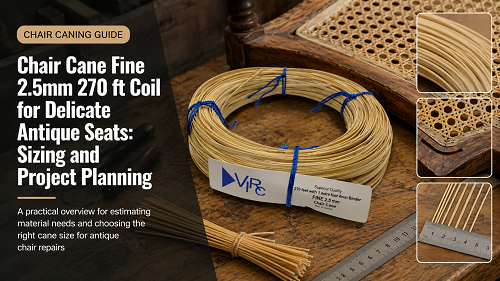
Chair Cane Fine 2.5mm 270 ft Coil is intended for traditional hand-caned seats that use individual strands through drilled holes, not for pressed-cane frames with a continuous groove. The critical buying question is whether 2.5mm matches the chair’s original hole diameter, spacing, pattern scale, and binder requirement.
Delicate antique seats reward accurate sizing because strand thickness changes how the pattern fills the opening. Cane that is too heavy can crowd closely spaced holes and look coarse, while cane that is too fine can leave a weak-looking pattern or require more passes than the frame was designed to carry.
How to Size Chair Cane Fine 2.5mm 270 Ft Coil for an Antique Seat
Begin 2.5mm fine cane selection by measuring the holes, not by judging the seat opening alone. The current product guidance identifies Fine 2.5mm cane for drilled-hole hand caning and gives a useful hole-spacing reference, but the original chair should remain the primary evidence.
Confirm the Seat Is Hand Caned
A traditional hand-caned chair has individual drilled holes around the frame. A pressed-cane chair has a continuous groove and uses prewoven sheet cane plus spline. These two systems require different material, so identify construction before ordering any strand cane.
For antique cane hole diameter, measure several undamaged holes with a small ruler or caliper and compare center-to-center spacing along a straight rail. Old finishes, repairs, and worn edges can make one hole misleading.
Use Surviving Original Cane as a Reference
If an intact strand remains, compare its width after it has dried. Do not measure a swollen strand immediately after wetting. Photograph the original weaving pattern before removal so the replacement follows the chair’s existing scale and direction.
Plan Delicate Chair Seat Weaving Before Cutting Cane
Good delicate chair seat weaving uses moderate strand tension and protects the drilled-hole edges. Fine cane should slide through clean holes without being scraped by old fragments or forced through a hole that is too small.
Clean Holes without Enlarging Them
Remove broken cane and debris carefully. The goal is to restore the original opening, not re-drill every hole larger. Enlargement changes spacing at the edge and can weaken a narrow antique seat rail.
A small restoration material quantity should include allowance for knots or fastening, trimming, damaged strands, and the final binder. Do not calculate only the visible distance across the seat opening.
Project Planning Measurements
- Seat opening width at the widest point
- Seat opening depth at the deepest point
- Drilled-hole diameter at several locations
- Center-to-center hole spacing along each rail
- Number of holes on each side
- Condition of the original pattern
- Binder width or surviving border cane
- Extra material allowance for damaged strands
Estimate Strand Use and Fine Binder Strip Requirements
A practical traditional caning strand estimate compares the 270-foot coil with a larger supply before work begins. If the chair is large, has many holes, or you are repairing several seats, the larger coil may reduce the risk of running short mid-pattern.
The fine binder strip use comes near the end of traditional caning and covers or organizes the outer fastening line. Check the original border treatment and confirm the supplied binder width suits the chair rather than assuming every fine-cane seat uses the same finish.
| Planning Factor | Fine 2.5mm Consideration | Reason |
|---|---|---|
| Hole size | Must accept the strand without crushing it | Protects cane and seat rail |
| Hole spacing | Closer spacing often suits finer cane | Maintains pattern scale |
| Seat size | Larger openings consume more strand | Affects coil quantity |
| Pattern complexity | Diagonal stages add material use | Changes total estimate |
| Binder | Confirm width and length separately | Finishes the outer edge |
| Extra allowance | Keep reserve for defects and trimming | Prevents mid-project shortage |
The Canadian Conservation Institute explains that cane and other plant fibres absorb moisture and become more flexible before stiffening as they dry. Review its guidance on basketry and plant material handling as background for why consistent wetting and drying matter during a careful restoration.
Control Tension on a Small Antique Chair Frame
Fine cane is flexible enough to invite over-tightening. Keep each weaving stage orderly and even rather than pulling individual strands as hard as possible. Natural cane tightens as it dries, and excessive wet tension can stress old holes or distort a delicate rail.
Work symmetrically from side to side, keep the shiny surface oriented consistently, and replace a kinked strand instead of pulling it through the pattern. Small antique seats show changes in strand direction and spacing more clearly than large coarse patterns.
Allow the finished seat to dry completely before use. Support the chair in a stable indoor environment and avoid direct heat, which can drive moisture out too quickly and make natural cane brittle over time.
Match Fine Cane to the Original Chair Instead of the Product Name Alone
Chair Cane Fine 2.5mm 270 ft Coil is a strong candidate when the original chair uses closely spaced drilled holes and a fine traditional pattern, but the measurement of the actual frame should make the final decision.
Document hole size, spacing, strand width, binder width, and estimated quantity before ordering. That record helps preserve the chair’s original visual scale and makes future repairs easier to plan.
Frequently Asked Questions
Is 2.5mm fine cane for pressed cane seats?
No. It is strand cane for hand-caned chairs with individual drilled holes. Pressed cane seats use sheet cane and spline in a groove.
How do I know whether 270 feet is enough?
Estimate the seat pattern, number of holes, diagonals, fastening, binder, and waste. Larger or multiple seats may justify a larger coil.
Should I enlarge old holes if the cane feels tight?
Not automatically. Confirm the correct cane size and clean old debris first. Enlarging original holes can weaken an antique frame.
Why is binder cane listed separately?
Binder material finishes the outside edge after the main weaving pattern. Its size and required length should match the chair’s original construction.
Can I pull fine cane very tight while it is wet?
Avoid excessive tension. Cane tightens as it dries, so use even controlled tension that does not stress the frame.
