
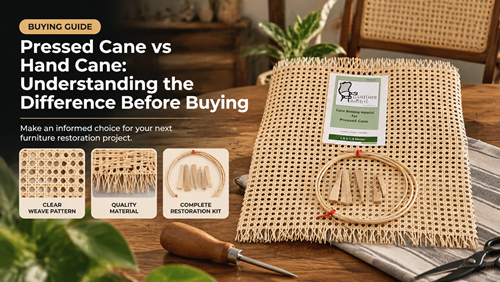
Pressed cane vs hand cane is not simply a choice between a fast method and a traditional method. In most repairs, the chair frame has already made the decision: pressed cane uses a pre-woven sheet fitted into a routed groove, while hand cane is woven strand by strand through drilled holes around the frame.
Buying the wrong system creates more than inconvenience. A sheet cannot be secured correctly to a hole-caned frame without alteration, and strand cane is not installed into a spline groove the way pressed webbing is.
Use Pressed Cane Vs Hand Cane Frame Clues First
Recognize the Main Chair Cane Types
The clearest way to compare chair cane types is to look at the frame rather than the top pattern. Groove-style spline cane and hole-to-hole hand caning can both produce a familiar woven appearance, but their attachment systems are completely different.
Turn the chair over and inspect the perimeter before ordering anything. This avoids buying webbing for a drilled-hole chair or strand cane for a routed groove.
Understand Traditional Strand Construction
In traditional cane weaving, individual strands pass through holes in a sequence of vertical, horizontal, and diagonal courses. Cane gauge must match the hole diameter and spacing so the finished seat tightens without overstressing the frame.
Hand caning requires more time and many temporary pegs, but it preserves the construction of chairs designed for that method. The underside is part of the finished work and should remain neat.
Compare the Furniture Weaving Method before Demolition
Different furniture weaving methods leave different evidence on the frame. Preserve photos and a sample of the old work before cutting it out, especially when the chair is antique or has an unusual pattern.
A previous repair may not match the original construction, so look for unused holes, filled grooves, or changes to the frame that indicate earlier alterations.
Match Repair Materials to the Existing Seat
Use a Complete System for Cane Seat Repair
Pressed cane seat repair normally uses pre-woven cane, spline, wedges, trimming tools, and suitable glue. Hand caning instead needs strand cane, binder cane, pegs, an awl, and a different weaving process.
Mixing materials from the two systems can create poor fit. Spline is a locking material for a groove; it is not a substitute for binder cane on a traditional hole-caned seat.
Select Woven Furniture Materials by Function
Browse woven furniture materials with the frame requirements in mind. Webbing rolls, strand cane, spline, binder, and basket reed may all come from rattan, but their shapes and jobs are not interchangeable.
A product description should state dimensions and intended use. If the listing only says rattan or cane without a gauge, width, or application, confirm details before purchasing.
Respect Cane Craftsmanship in Restoration
Good cane craftsmanship is visible in even spacing, clean corners, controlled tension, and a method that respects the chair. A fast conversion is not always a better repair if it permanently changes an older frame.
When historical or monetary value is high, document the chair and consult an experienced seat weaver before modifying holes or routing a new groove.
Pressed Cane and Hand Cane Comparison
Use this comparison as a planning aid. The furniture frame, product specifications, and installation method should always take priority over a generic rule.
| Feature | Pressed Cane | Hand Cane |
|---|---|---|
| Frame | Routed groove | Drilled holes |
| Material | Pre-woven sheet or roll | Individual strand cane |
| Fastener | Reed spline and glue | Cane woven through holes |
| Typical tools | Wedges, chisel, knife | Pegs, awl, scissors |
| Pattern creation | Pre-woven before installation | Created on the chair |
| Repair planning | Opening and groove size | Hole size, spacing, and strand gauge |
Inspect Before Choosing a Caning Method
Before You Commit to the Final Cut or Installation
- Look for a continuous groove
- Look for drilled holes around the frame
- Photograph the underside
- Keep a piece of the old cane
- Measure groove width or hole diameter
- Check frame joints before weaving
- Match material gauge to construction
- Avoid permanent conversion without a reason
For a step-by-step example of the traditional method, review the hand chair caning instructions. It shows why hole-to-hole caning uses a different material sequence from pressed webbing.
Keep measurements, product labels, and a small offcut after the project. Those records make future maintenance or a matching second repair much easier than trying to identify the material years later.
Plan the Project with Fewer Surprises
The pressed cane vs hand cane decision is usually a frame-identification problem, not a style preference. Groove equals pre-woven webbing and spline; drilled holes equal strand cane and hand weaving.
Once the method is known, measurements become much more useful and the shopping list becomes smaller, clearer, and less likely to include incompatible materials.
Frequently Asked Questions
Can pressed cane be installed on a hand-caned chair?
Not without altering the frame. A hand-caned chair has drilled holes rather than the routed groove needed for webbing and spline.
Is hand cane stronger than pressed cane?
Strength depends on frame design, material quality, gauge, installation, and use. Each method performs best on a frame designed for it.
Why do both methods sometimes have a hexagonal pattern?
Pressed cane can be machine woven in a pattern that resembles traditional hand caning, even though the attachment method is different.
Does pressed cane always use spline?
Most groove-style pressed-cane seats use spline, though special constructions exist. Inspect the original frame and follow the appropriate method.
Which method is easier for a beginner?
Pressed cane is often faster because the pattern is already woven, but removal, measuring, groove cleanup, and spline installation still require care.
