
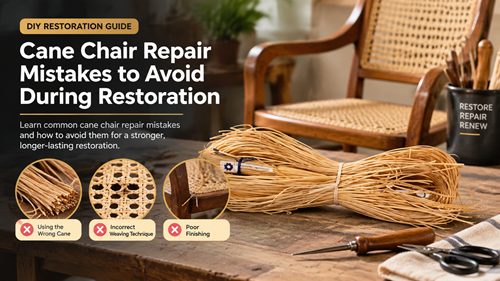
Most cane chair repair mistakes happen before the new seat is finished. Misidentifying the caning method, damaging a spline groove, ordering the wrong material, over-tightening wet cane, or trimming too early can turn a manageable restoration into a second repair. A careful process is slower at the beginning and faster overall. Photograph the chair, inspect […]
Category Archives: Chair Caning
19
Oct
Oct
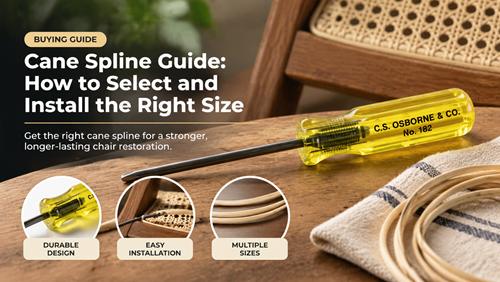
A cane spline guide is most useful after the old spline and glue have been removed. Reed spline is the locking strip that secures pressed cane webbing in a routed groove, and its fit depends on the actual cleaned channel rather than the compressed size of the old spline. Spline that is too small can […]
16
Oct
Oct
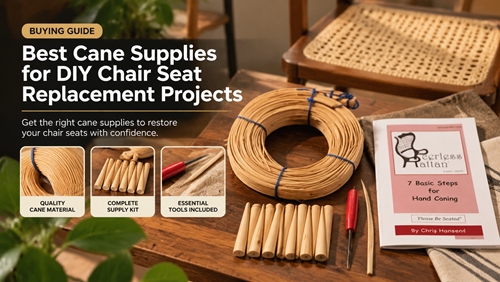
The best cane supplies for chair repair are determined by the chair, not by the size of a tool bundle. A groove-style pressed-cane seat needs webbing, spline, wedges, trimming tools, and compatible glue, while a drilled-hole hand-caned seat needs strand cane, binder cane, pegs, and an awl. Before buying a kit, inspect the frame and […]
13
Oct
Oct
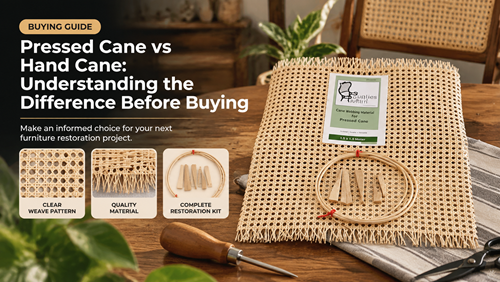
Pressed cane vs hand cane is not simply a choice between a fast method and a traditional method. In most repairs, the chair frame has already made the decision: pressed cane uses a pre-woven sheet fitted into a routed groove, while hand cane is woven strand by strand through drilled holes around the frame. Buying […]
07
Oct
Oct
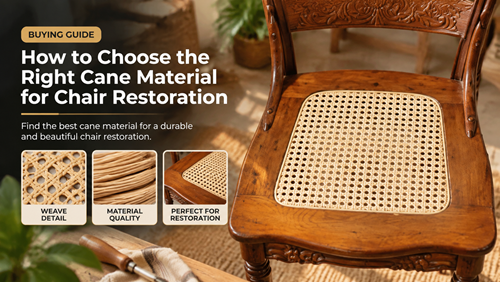
Choosing cane material for chair restoration is easier when the frame is treated as the specification. A chair with a routed groove needs a different material system from a chair with drilled holes, even when both finished seats have a familiar hexagonal appearance. The restoration goal also matters. An antique chair may benefit from matching […]
30
Sep
Sep
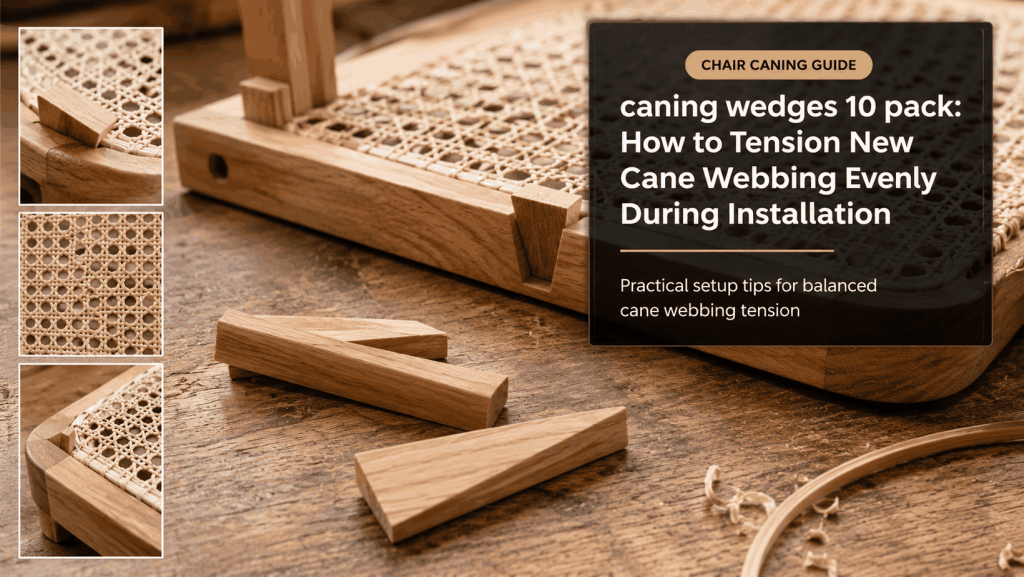
caning wedges 10 pack gives a pressed-cane installer multiple temporary holding points around the chair groove. The wedges are not used to create final drum-tight tension. Their job is to keep the wet webbing centered, seated, and stable while the installer works around the perimeter and prepares for spline. Even tension comes from sequence. If […]
Chair Caning
Chair Cane Fine 2.5mm 270 ft Coil for Delicate Antique Seats: Sizing and Project Planning
21
Sep
Sep
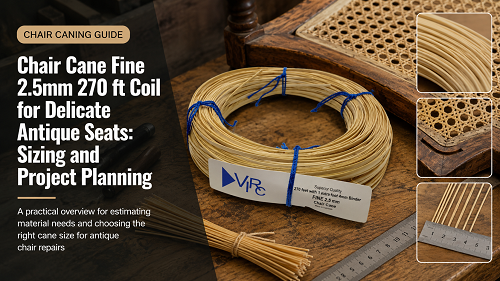
Chair Cane Fine 2.5mm 270 ft Coil is intended for traditional hand-caned seats that use individual strands through drilled holes, not for pressed-cane frames with a continuous groove. The critical buying question is whether 2.5mm matches the chair’s original hole diameter, spacing, pattern scale, and binder requirement. Delicate antique seats reward accurate sizing because strand […]
07
Sep
Sep
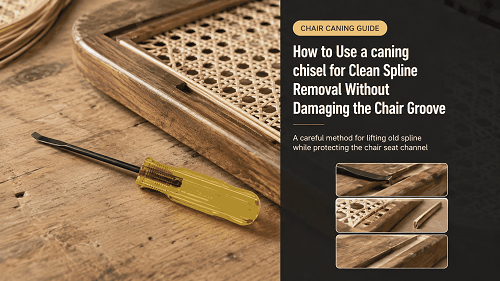
A caning chisel is most useful when it removes old spline in small controlled sections instead of being treated like a pry bar. The chair groove is part of the frame, so every cut should free the old material while preserving the groove width, depth, and outer lip for the new pressed-cane installation. Clean removal […]
14
Aug
Aug
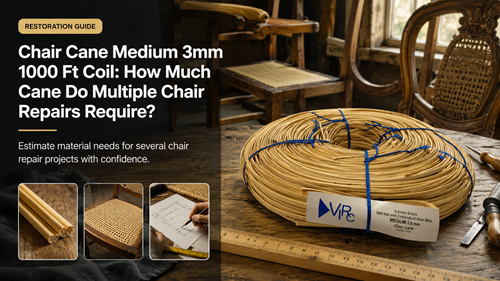
Chair Cane Medium 3mm 1000 Ft Coil is a workshop-size supply for hand-caned chairs that genuinely use medium strand cane. The question is not simply how many seats a thousand feet can cover. Seat area, perimeter hole count, weaving pattern, strand waste, broken pieces, and the caner’s experience all change consumption. For several repairs, create […]
10
Aug
Aug
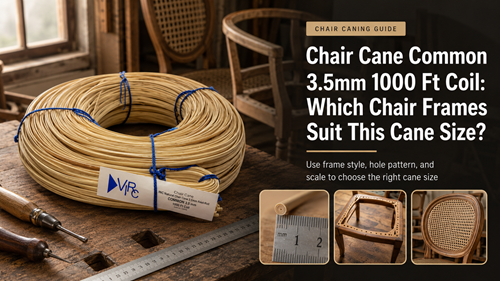
Chair Cane Common 3.5mm 1000 Ft Coil is a substantial strand size intended for hand-caned furniture with perimeter holes large and widely spaced enough to accept common cane without crowding. Choosing by the chair’s hole diameter and center-to-center spacing is more reliable than choosing by seat size alone. A thousand-foot coil is also a workshop […]